
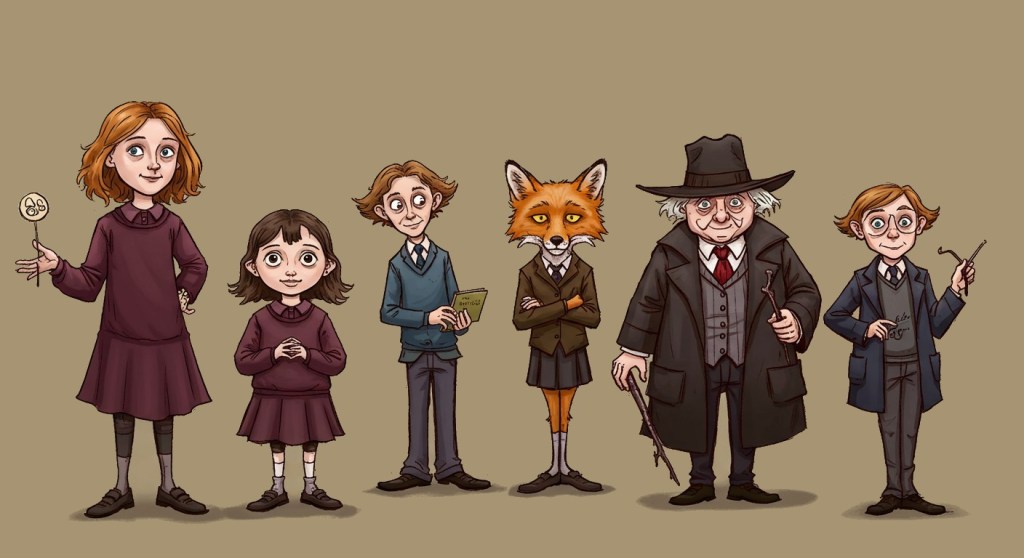
Roald Dahl, a name synonymous with childhood wonder and a dash of delightful darkness, remains a monumental figure in 20th-century literature. His stories, a unique blend of dark humour, unrestrained fantasy, and sharp social commentary, have captivated generations. But what exactly makes Dahl’s writing so enduringly popular? Delving into his techniques, themes, and unique creative process reveals a master storyteller who understood the hearts and minds of his young readers with remarkable clarity.
Dahl’s creativity was boundless, often manifesting in the fantastical worlds he constructed. Willy Wonka’s chocolate factory, James’s giant peach, and the BFG’s dream-catching adventures are testaments to his vivid imagination. These weren’t just whimsical settings; they were playgrounds where morality plays unfolded, and children could vicariously experience triumph over adversity. His creative spark wasn’t limited to grand settings, though. It permeated his language itself. Dahl famously invented words, a practice most evident in The BFG with its “Gobblefunk.” Words like “whizzpopping,” “frobscottle,” and “scrumdiddlyumptious” added layers of humour and absurdity, making the stories uniquely his. This linguistic playfulness wasn’t mere silliness. It engaged children on a deeper level, encouraging them to explore language and infer meanings from context, fostering a sense of active participation in the story.
Dahl’s writing techniques were as distinctive as his imagination. One of his most effective tools was his narrative voice. He often adopted a child-centric viewpoint, either through first-person narration or a third-person voice closely aligned with the child protagonist’s perceptions. This created strong reader identification, allowing young readers to see the world through a familiar lens. Furthermore, Dahl’s narrators were often conversational and intrusive, breaking the fourth wall to address the reader directly with questions, advice, or personal opinions. This created an intimate, engaging tone, mimicking the experience of an oral storyteller. His prose was typically simple and accessible, making his narratives highly effective when read aloud. Yet, this simplicity masked a profound storytelling intelligence, allowing him to convey complex themes without resorting to overly complicated vocabulary.
Another cornerstone of Dahl’s style was his use of exaggeration and hyperbole. Character traits were pushed to extremes: villains were monstrously cruel, while heroes possessed remarkable inner qualities. Situations and settings were often larger than life, and emotions were conveyed with intense exaggeration, often for humorous effect. This constant use of hyperbole created vivid, memorable characters and heightened the drama and emotional impact of the narrative. It also reinforced the thematic contrasts, particularly the stark divide between the protagonists’ exaggerated goodness and the antagonists’ exaggerated evil.
Dahl’s plotting was designed for maximum engagement. He was known for unexpected endings and twists, which subverted reader expectations and added excitement. His stories were fast-paced, with apparent conflicts and escalating action, essential for holding the attention of a young audience. He also employed vivid imagery, often using grotesque descriptions to depict villains or unpleasant situations, which served as a visual shorthand for moral corruption.
Thematically, Dahl’s work consistently engaged with core concerns that resonated deeply with his audience. The most pervasive theme was the fundamental conflict between good and evil, framed as a struggle between virtuous children and malevolent adults. This apparent moral dichotomy provided a straightforward framework for young readers, offering a satisfying sense of justice and wish-fulfilment. Closely linked to this was the theme of power dynamics, particularly between adults and children. Dahl highlighted the vulnerability of children in a world dominated by adults who might wield their authority cruelly or neglectfully. A crucial element of his narratives was the eventual empowerment of these child protagonists, who used their intelligence and resourcefulness to challenge their oppressors.
Dahl also championed the triumph of inner virtues, emphasising that success and reward were determined by qualities like kindness, intelligence, and resilience rather than external factors like wealth or status. Magic and fantastical elements were integral to his storytelling, providing thrilling escapism and infusing the stories with a sense of wonder. Recurring motifs like food, family, transformation, and cruelty reinforced his core themes, creating a rich and layered narrative experience.
Dahl’s writing practice was profoundly influenced by his child audience. He understood their preferences, cognitive abilities, and emotional needs. His language choices, humour, pacing, and thematic focus were all tailored for children. He struck a delicate balance between providing pure entertainment and engaging with meaningful themes relevant to childhood, addressing complex issues of power, fairness, fear, and morality in a way that was accessible.
Roald Dahl’s legacy, however, is not without its complexities. His antisemitic remarks and problematic depictions related to race, gender, and violence within his texts have drawn valid criticism. The recent controversy surrounding posthumous edits to his texts further highlights the ongoing debate about preserving literary heritage versus adapting it for evolving social norms.
Despite these controversies, Roald Dahl’s impact on children’s literature remains undeniable. His unique narrative voice, inventive techniques, unforgettable characters, and willingness to blend dark humour with fantasy created a body of work that continues to entertain and provoke readers worldwide. His stories remain potent, unsettling, and fiercely imaginative, securing his place as a significant, albeit controversial, force in modern literature. Dahl’s genius lay in his ability to tap into the hearts and minds of children, offering them stories that were both wildly entertaining and deeply resonant, a testament to his enduring creative legacy.
 The Original Writers Group