
Granta has, for over a century, been a vital home for new writing, a mirror reflecting societal shifts, and a launchpad for some of the most significant voices in contemporary literature. From its unassuming beginnings as a student publication to its current stature as an international literary powerhouse, Granta‘s journey is a compelling narrative of evolution, bold editorial vision, and an unwavering belief in the power of the story.
Granta‘s origins are rooted in the halls of Cambridge University, where it was founded in 1889 by students and initially named The Granta after the local river. It began as a lively periodical featuring student politics, witty conversation – known as “badinage” – and nascent literary efforts. This foundational period established Granta‘s commitment to intellectual discourse and creative expression, setting the stage for its future prominence. Even in these early days, the magazine served as a nursery for future literary stars, publishing early works by writers who would later become household names, including A.A. Milne, Michael Frayn, Stevie Smith, Ted Hughes, and Sylvia Plath. This demonstrates that even a seemingly niche or local platform, when dedicated to quality and providing a space for literary enterprise, can become a crucial early incubator for significant talent. The initial focus on “badinage” also hinted at an early, irreverent spirit, a characteristic that would resurface and define its later, more prominent incarnation.
However, by the 1970s, the publication faced severe financial difficulties and increasing student apathy, teetering on the brink of irrelevance. This precarious period underscored the inherent challenges faced by literary ventures and highlighted the critical need for radical intervention to ensure its survival and future impact. The magazine’s struggle illustrated that even a publication with a storied past and a history of nurturing talent could falter without a dynamic adaptation to changing times.
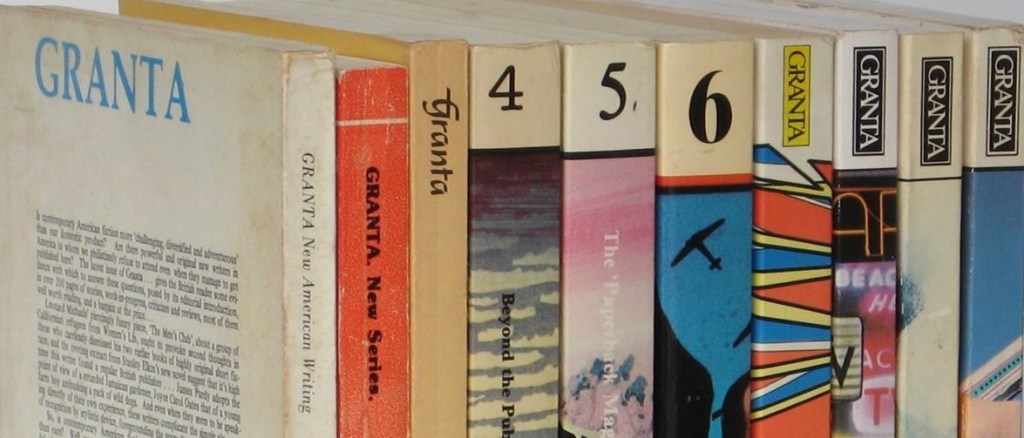
A pivotal moment in Granta‘s history was in 1979 when it was relaunched as a literary quarterly in paperback format. This transformation was spearheaded by a group of postgraduates, most notably Bill Buford and Peter de Bolla. The choice of a paperback format was a deliberate decision, making the magazine more accessible and distinguishing it from traditional academic journals, lending it the gravitas and permanence of a book.
Buford’s editorial vision was assertive and polemical. The first issue under their editorship was tellingly titled New American Writing, featuring authors like Joyce Carol Oates and Susan Sontag. Buford openly critiqued contemporary British fiction as “neither remarkable nor remarkably interesting” and suffering from “uninspired sameness.” He aimed to fill a “cultural gap” in Britain by introducing “challenging, diversified, and adventurous” American fiction. His focus later extended to “Dirty Realism,” a style characterised by “unadorned, unfurnished, low-rent tragedies” about everyday people, often written in a “flat, ‘unsurprised’ language.” This editorial stance was a deliberate act of “outrage” and boundary-crossing, positioning Granta as a rebellious force.
A few years after the relaunch, Buford conceived the idea for the “Best of Young British Novelists” issue. The first, Granta 7, published in partnership with Penguin in 1983, became a much-fêted list, featuring now-famous authors such as Martin Amis, Pat Barker, Julian Barnes, William Boyd, Kazuo Ishiguro, Ian McEwan, and Salman Rushdie. This series quickly cemented Granta‘s reputation as a discerning and influential voice in identifying emerging talent. The “Best of Young British Novelists” list was “much-fêted” and featured authors who “did indeed influence British fiction for decades to come.” Bill Buford himself said, “These young writers are the future of literature. Watch. History will prove me right.” This was not just a prediction; it was an active shaping of the literary landscape. This series illustrates the immense power of a respected literary institution to not just reflect but actively create literary trends and careers. Granta generated significant media attention and reader interest, effectively launching careers and influencing what publishers and readers considered “important” new voices. It became a “barometer of Britain’s changing literary landscape,” demonstrating how cultural capital can translate into tangible influence on literary production and consumption.
Granta Books was established ten years after the magazine’s relaunch, in 1989, by Bill Buford. Its goal was to publish “only writing we care passionately about,” focusing on impactful literature that “stimulates, inspires, addresses difficult questions, and examines intriguing periods of history.” Early notable publications included John Berger’s Once in Europa and Gabriel García Márquez’s Clandestine in Chile. The establishment of Granta Books ten years after the magazine’s relaunch indicates a natural expansion from a periodical platform to a full-fledged publishing house. The stated goal of Granta Books to publish “only writing we care passionately about” and to disseminate “impactful literature” directly mirrored the magazine’s editorial principles. This shows how a successful literary magazine can serve as an incubator for a larger publishing enterprise. The magazine identifies talent and trends, cultivates an audience, and builds a brand identity, which then provides a strong foundation for a book imprint. This synergy allows for a more comprehensive and sustained impact on the literary world, extending beyond quarterly issues to a permanent catalogue of influential books.
Following Bill Buford’s tenure, Granta has seen a succession of influential editors, each contributing to its evolving identity and reach. These transitions reflect broader shifts in literary discourse and the publishing landscape.
Ian Jack (1995-2007) Under his leadership, Granta continued the “Best of Young” series, notably launching the first “Best of Young American Novelists” issue in 1996. Jack’s approach for the British lists was to highlight “jolly good writers” and encourage readers to buy their books. His own editorial vision, as seen in the 1997 India issue, aimed to capture a country undergoing fundamental change, moving towards modernity, and introduced authors like Arundhati Roy to Western readers with an extract from The God of Small Things. He also edited the first “Best of Young American Novelists” issue, acknowledging the challenges of judging and famously describing the omission of Nicholson Baker as “insane and perverse.”
Jason Cowley (2007-2008) succeeded Jack, taking over in September 2007. His brief tenure was marked by a redesign of the magazine and the launch of a new website. He left in September 2008 to become the editor of the New Statesman.
Alex Clark (2008-2009) became Granta‘s first female editor in May 2008, but her tenure was also brief, ending in May 2009. Clark acknowledged the evolution of literary discourse to encompass writing beyond America and Britain, questioning whether the era of grand statements about literature’s direction had become anachronistic. Her approach valued the individual sensibility of writers, noting that fiction might “succeed best when it represents nothing but itself.” She sought to provide an “entertaining and illuminating sample of today’s literary landscape.”
John Freeman (2009-2013), an American editor, succeeded Alex Clark in May 2009, serving until 2013. Freeman recognised that Granta had become an insular “museum.” His vision was to make Granta more open, inclusive, and globally-minded, actively seeking “what was new in writing, anywhere in the world.” He aimed to treat writing globally “without making much fanfare over that parameter,” viewing it as an antidote to rising nationalism. He significantly diversified the team, hiring editors from various international backgrounds. Freeman also streamlined production, worked on multiple issues simultaneously, and pioneered localised launches, such as the successful Chicago issue, to engage real-world communities. He emphasised the importance of visual culture, revamping covers, and launched a dozen new international editions in translation.
Sigrid Rausing (Publisher since 2005, Editor 2013-2023) acquired Granta Publications in 2005, saving it from potential acquisition by larger houses. She became editor in 2013, serving until Autumn 2023, when she announced Thomas Meaney as her successor. Rausing expanded the list while maintaining Granta‘s “high literary character.” Her introductions to issues often reflect on complex societal and emotional states, such as isolation, grief, the relationship between individuals and the state, and the “conundrum of America.” She chaired the judging panel for the 2023 “Best of Young British Novelists.”
Thomas Meaney (Current Editor, from Autumn 2023) took over as editor from Sigrid Rausing in Autumn 2023. His editorial introductions explore concepts like “Generations,” examining how shared experiences define age cohorts and how understanding past generations informs the present. He continues Granta‘s tradition of engaging with contemporary global issues, as seen in issues like “China” and “Badlands.”
The evolution of Granta‘s editorial leadership illustrates a progression from a polemical stance to a more nuanced curatorial approach. Bill Buford’s initial editorial approach was “insistent, polemical, occasionally table-thumping,” actively challenging British literary norms. Alex Clark, while acknowledging this legacy, questioned whether “grand statements about literature, its provenance, its direction, its nature and its aim, has begun to seem anachronistic,” leaning towards individual literary sensibility. John Freeman then moved to a “global” focus, but without “much fanfare,” aiming for an “antidote for the deformed narratives of nationalism.” Sigrid Rausing’s introductions are more reflective and thematic. This shows a maturation in Granta‘s editorial posture. From an initially aggressive stance designed to disrupt and establish a new identity, the magazine has evolved into a more sophisticated, globally aware curatorial role. While still opinionated, the later editors demonstrate a greater comfort with complexity and a less prescriptive view of what “new writing” should be, reflecting broader shifts in literary criticism from manifestos to more nuanced, inclusive approaches.
The “Best of Young” series, a hallmark of Granta‘s influence, also serves as a continuous self-assessment and industry barometer. The series is published “decade by decade,” serving as a recurring benchmark for emerging talent. The judging panels change, and the criteria adapt (e.g., discussions about age limit changes and inclusion of non-novelists). This indicates a continuous, iterative process by which Granta assesses the literary landscape and its own role within it. Beyond merely identifying talent, the “Best of Young” series acts as a quadrennial (or decennial) self-reflection for Granta and the wider literary community. It forces a re-evaluation of what constitutes “young” and “novelistic” talent, sparking debates (like the ageism controversy) and revealing shifts in literary forms, demographics, and themes. It is a dynamic mechanism for the magazine to maintain its relevance and authority by actively engaging with and shaping the ongoing conversation about contemporary literature.
Granta‘s content has undergone a significant evolution, expanding its scope and deepening its engagement with the contemporary world. From its student origins, Granta published prose and poetry. After its 1979 relaunch, it consistently featured an “eclectic mix” of fiction, non-fiction, memoirs, journalism, photography, and poetry. This broad scope allows Granta to capture a multifaceted view of contemporary life and literary expression. The magazine also launched a dedicated poetry list in 2019, further cementing its commitment to diverse literary forms.
A defining characteristic of the post-1979 Granta is its quarterly issues curated around a central theme. These themes allow for deep exploration of subjects such as conflict, travel, language, the influence of America, generations, national identity (e.g., “China,” “Deutschland”), and personal experiences like “Dead Friends” or “In the Family.” This commitment reflects its dedication to engaging with a broad spectrum of literary forms and societal issues. This consistent use of central themes for each issue allows for a “deep exploration” of complex subjects. This moves beyond a mere collection of stories to a curated dialogue on specific societal issues, from conflict and travel to “Generations” and “Extraction.” This thematic approach elevates Granta from a simple literary anthology to a platform for intellectual and cultural discourse. It enables the magazine to engage with pressing contemporary issues through diverse literary lenses, fostering deeper understanding and conversation. This model differentiates it from more general literary journals and positions it as a significant contributor to cultural commentary, making literature a “powerful tool for advocacy and awareness.”
The profound impact of the “Best of Young” lists in identifying and nurturing new literary talent, shaping careers, and influencing literary trends cannot be overstated. The “Best of Young” lists (British, American, Spanish-Language, Brazilian) have been instrumental in highlighting the potential of writers under 40, cementing Granta‘s reputation as a “discerning and influential voice.” These lists have launched the careers of numerous acclaimed authors, including Kazuo Ishiguro, Salman Rushdie, Julian Barnes, Martin Amis, Pat Barker, Zadie Smith, Monica Ali, and Ian McEwan. While sometimes controversial for perceived ageism or predictability, they consistently generate significant media attention and act as a “barometer of Britain’s changing literary landscape.”
While undeniably instrumental in launching careers and shaping literary trends, the “Best of Young” lists have also attracted criticism for “ageism” and “predictability.” The debate around the criteria (e.g., age limits, inclusion of non-novelists) highlights the tension between the desire to identify emerging talent and the inherent limitations and biases of such selective processes. This reveals the complex dynamics of literary gatekeeping and canon-formation. While such lists provide valuable exposure and validation, they also risk perpetuating certain biases or overlooking talent that does not fit predefined categories. The ongoing debates surrounding these lists underscore their power to both elevate and potentially exclude, making them a significant, albeit contested, force in the literary world.
The increasing prominence of translated fiction and international voices reflects a globalised literary landscape. Under John Freeman, Granta explicitly sought to treat writing globally and launched numerous international editions in translation. This commitment continues, with recent issues focusing on specific regions like China and Germany. Granta Magazine Editions, a new imprint launched in 2025, specifically focuses on publishing translated titles that emerge from the magazine’s “geographical spotlight issues,” indicating a strategic effort to bring excellent international writers to Anglo audiences. Granta has published works by thirty-one Nobel Prize laureates, many of whom are international authors. This reflects a conscious move away from a purely Anglo-American focus towards a truly global literary perspective. John Freeman’s push for “global” writing and the launch of international editions, coupled with the new Granta Magazine Editions imprint focusing on translations, demonstrates a deliberate strategy to expand beyond the Anglo-American literary sphere. This is explicitly framed as an “antidote to rising nationalism” and a response to the low translation rates in English publishing. This signifies a recognition that for a literary magazine to remain relevant and influential in an increasingly interconnected world, it must actively champion voices from diverse linguistic and cultural backgrounds. Granta‘s commitment to translated fiction is not just about expanding its content; it is a strategic move to address a perceived deficit in English-language publishing and to position itself as a truly international literary arbiter, fostering cross-cultural understanding through storytelling.
Granta‘s journey has been marked by a continuous adaptation of its format and reach, leveraging new technologies to enhance its presence. Initially a student periodical, Granta transformed into a literary quarterly in paperback format in 1979. This physical format choice, resembling a book, contributed to its perceived gravitas and permanence. The covers themselves evolved, with artistic directors like Michael Salu creating textured, conceptually rich designs, sometimes using antiquated printing processes to reflect themes. The choice of a paperback book-like format in 1979 and the continued emphasis on distinctive, often artistically crafted covers suggests that Granta views itself as more than just a magazine. The use of traditional printing techniques for covers further emphasises this. This indicates a conscious effort to imbue the physical object with artistic and intellectual weight, distinguishing Granta from ephemeral periodicals. It appeals to a readership that values the tactile and aesthetic experience of reading, positioning the magazine as a collectible, enduring work of art in itself, rather than just a vessel for content. This strategy reinforces its high literary character and premium branding.
The magazine has strategically embraced digital platforms to expand its reach and accessibility. It offers digital subscriptions, allowing access to its latest issues and an archive of over 160 back issues online and via a dedicated Granta app. In 2022, Granta Books launched a fully-searchable digital book collection in partnership with Exact Editions, complementing the magazine archive and targeting international scholars and students. This digital strategy reflects a commitment to sharing “high-quality writing as far and wide as possible.” The shift from a purely physical publication to offering digital subscriptions and a searchable online archive is not merely a convenience but a strategic move to ensure longevity and broaden accessibility. The digital book collection for scholars and students highlights a recognition of the academic and research value of its content. This demonstrates that in the modern publishing landscape, a robust digital strategy is no longer optional but essential for a literary magazine’s survival and continued influence. It transforms the magazine from a transient quarterly into a permanent, searchable, and globally accessible literary resource, enhancing its long-term impact and educational utility.
Granta‘s international significance is evident in its exploration of global subjects. Under John Freeman, the magazine launched a dozen new editions in translation across various countries, including Norway, Japan, Brazil, Bulgaria, Finland, Portugal, and Italy. These collaborations fostered a “braintrust of editors” and provided early exposure for international authors. The new Granta Magazine Editions imprint further solidifies its commitment to publishing translated works from global literary scenes.
Granta is consistently acclaimed for the quality of its writing and its international reach. It has been described as a “literary powerhouse” and has won numerous awards for its contributions to literature. Its influence stems from its consistent delivery of high-quality, original, inventive, and provocative writing, and its role in discovering and nurturing new talent. It has shaped literary preferences and trends, making a “significant mark on the literary scene.”
From its humble beginnings as a Cambridge student periodical in 1889, Granta underwent a radical transformation in 1979 under Bill Buford, evolving into a globally recognised literary quarterly. This rebirth was characterised by a bold editorial vision that challenged existing literary norms and championed new voices, particularly from America. Through successive editorial tenures, Granta has consistently adapted its focus, expanding its geographical reach, diversifying its content, and embracing digital platforms, all while maintaining its core commitment to high-quality, passionate storytelling.
Granta‘s enduring success lies in its unwavering “belief in the power and urgency of the story,” a principle that has guided its editorial choices since Buford’s relaunch. Its commitment to publishing “only writing we care passionately about” has ensured consistent quality and originality. Furthermore, its remarkable adaptability—from its format changes to its embrace of global voices and digital innovation—has allowed it to remain relevant across vastly different literary and cultural landscapes.
Granta continues to be a significant force in contemporary literature, not merely reflecting trends but actively shaping them through its thematic issues, its “Best of Young” lists, and its dedication to translated fiction. As the literary world becomes increasingly global and digitally integrated, Granta‘s proactive engagement with these shifts positions it to maintain its influence, fostering new talent and cross-cultural dialogue for generations to come. Its legacy is one of dynamic evolution, proving that a literary institution can honour its past while boldly embracing the future.
Take out an online Granta subscription for six months for just £1.
 The Original Writers Group