
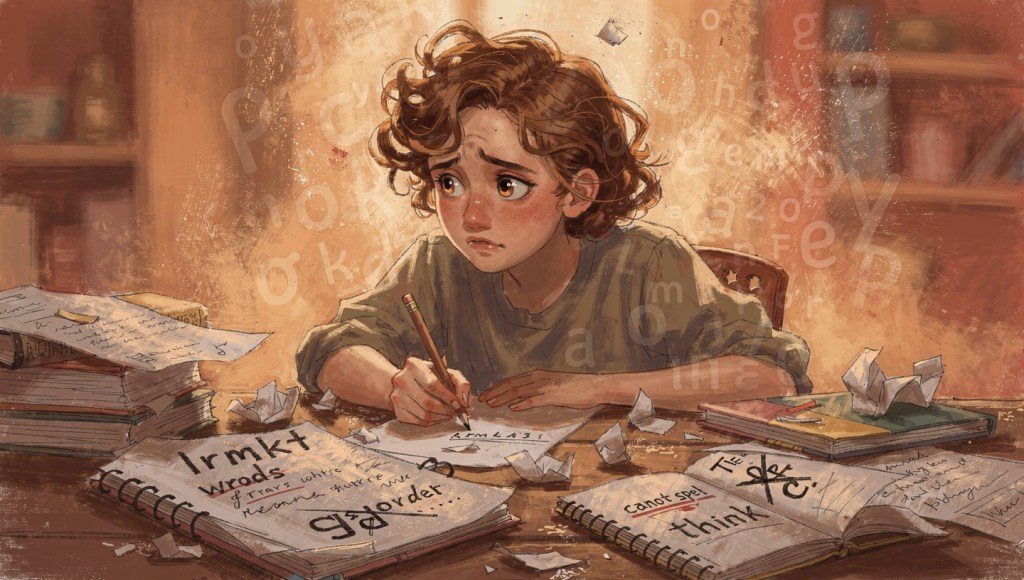
Dyslexia in the Literary World
The intersection of neurodivergence and high-level literary production presents a fundamental challenge to traditional models of literacy and cognitive development. Historically, the inability to fluently decode and encode text was synonymous with a lack of intellectual capacity or “word blindness”.1 However, the professional trajectories of many of the world’s most successful novelists, poets, and screenwriters suggest that dyslexia is not merely a deficit in phonological processing, but a distinct cognitive architecture that can be leveraged to produce unique narrative structures and intensely visual storytelling.2 This report examines the specific methodologies, assistive technologies, and interpersonal support systems utilised by dyslexic authors to navigate the rigorous demands of the literary industry. By synthesising the experiences of figures ranging from Agatha Christie to contemporary award-winners like Sally Gardner and Benjamin Zephaniah, it becomes clear that “dyslexic thinking” often serves as a primary driver of creative innovation rather than an obstacle to be overcome.5
The Neurocognitive Landscape: From Deficit to Diversity
The prevailing understanding of dyslexia has shifted from a medicalised “disorder” to a neurodiversity model that emphasises cognitive strengths.2 While the core challenge of dyslexia involves difficulties with decoding (sounding out words) and encoding (spelling), these limitations often prompt the development of compensatory mechanisms that are highly beneficial in the context of fiction writing.2 Research into “Dyslexic Thinking” skills identifies high-level abilities in imagining, visualising, reasoning, and exploring—traits that are essential for the construction of complex fictional worlds and the management of intricate plot structures.5
Data collected by advocacy organisations highlight the disproportionate presence of dyslexic individuals in fields that require high-level spatial and creative reasoning. This phenomenon is reflected in the literary world, where authors often describe their writing process as a form of visual architecture rather than a linear linguistic exercise.3
| Dyslexic Cognitive Strength | Application in Narrative Construction | Frequency of Above-Average Proficiency |
| Imagining | Generating original work; giving existing ideas a novel spin. | 84% |
| Reasoning | Understanding patterns, evaluating narrative possibilities and plot holes. | 84% |
| Exploring | Energetic curiosity; deep research into niche or complex subjects. | 84% |
| Visualising | Interacting with 3D space and sensory details; mental storyboarding. | 75% |
| Communicating | Crafting clear, engaging oral or visual messages. | 71% |
Note: Data derived from the “Dyslexic Thinking” skill assessment framework.5
These cognitive markers suggest that the dyslexic mind is optimised for the “big picture”—a trait that allows novelists to maintain continuity across multi-volume series or complex detective mysteries, even when the granular act of spelling remains difficult.2
Historical Precedents and Retrospective Diagnosis
The presence of dyslexia in the literary canon is not a modern phenomenon, though the terminology used to describe it has evolved significantly. Historical figures often exhibited traits of “sloppy” or “careless” writing that are now recognised as markers of neurodivergence.1 Retrospective analysis of historical writers provides a vital context for understanding how these individuals navigated a world without modern assistive technology.
The Case of F. Scott Fitzgerald and Early American Letters
F. Scott Fitzgerald, widely considered one of the preeminent American novelists of the 20th century, is believed by many historians to have possessed a learning disability, most likely dyslexia.1 Contemporary accounts of Fitzgerald’s drafts noted profound difficulties with spelling and grammar—issues that persisted throughout his career despite his immense success with The Great Gatsby.1 For Fitzgerald, the act of writing was a struggle with the physical word. Yet, his ability to capture the social nuances and visual opulence of the Jazz Age remained unaffected by his mechanical shortcomings.1
Similarly, the Newbery Medal-winning author Avi, known for his historical fiction, faced severe criticism from teachers for “messy and careless” writing.1 His trajectory—failing out of his first high school only to become one of the most prolific writers for middle-grade readers—highlights the role of specialised tutoring in transforming a perceived disability into a professional asset.1 Avi’s experience underscores a recurring theme: the pivot from the “shame” of technical failure to the “power” of storytelling often requires an intervention that validates the writer’s ideas over their orthographic accuracy.1
The Dictation Legacy: Agatha Christie
The case of Agatha Christie offers perhaps the most famous example of a writer who successfully bypassed the mechanical barriers of dyslexia through systematic workflow adjustments.10 While some historians debate the formal diagnosis—noting that the term was not in common use during her early years—Christie herself admitted that “writing and spelling were always terribly difficult” for her.12 Her mother provided lessons at home, which may have allowed her to avoid the stigmatisation common in traditional school environments.12
Christie’s strategy was inherently collaborative and technological. She utilised a Dictaphone to record her stories, which a secretary then transcribed into a typescript.11 This allowed her to maintain a rapid production pace—often completing a novel in just a few months—without being stalled by the physical act of writing or the frustration of spelling.11 This model remains a blueprint for modern dyslexic authors who utilise speech-to-text software to achieve a similar “oral-to-written” pipeline.11
Narrative Construction: The Puzzle and the Cinema
One of the most profound insights into the dyslexic writing process is the rejection of linearity. Many dyslexic authors describe their work as a spatial or visual assembly rather than a sequential one.3
The “Puzzle Maker” Methodology
Author Amanda Ann Gregory characterises her writing process as a “puzzle maker and solver” method.3 Rather than drafting from chapter one to the end, she generates thousands of “pieces”—research articles, quotes, case studies, and index cards—which she then organises visually.3 This spatial organisation involves taping cards to walls or arranging piles of books, allowing her to see the “movement” of the story.3
Gregory describes a heightened sense of “word sight,” in which words are treated as physical objects rather than abstract sounds.3 This visual translation is critical for authors who suffer from “auditory deafness” toward words—a condition where spoken information carries little meaning until it is visualised.3 For these writers, the fluidity of letters (e.g., “d” becoming “b” or “p” becoming “q”) is not an error to be feared but a sign of a “flexible and adaptable” mind that can see multiple permutations of a narrative.3
| Phase of the Puzzle Method | Functional Mechanism | Cognitive Benefit |
| Component Generation | Creation of disparate pieces on index cards/notes. | Reduces cognitive load by focusing on one idea at a time.3 |
| Visual Sorting | Organising pieces by content and flow on a wall or table. | Identifies “outliers” or plot holes through spatial patterns.3 |
| Cluster Connection | Allowing sentences and paragraphs to form naturally into chapters. | Bypasses the anxiety of the blank, linear page.3 |
| Adaptive Editing | Moving sentences that “hover” or letting chapters “float away.” | Encourages “killing your darlings” through objective visual detachment.3 |
Cinematic Storytelling and Non-Linear Drafting
Margot Conor and Sally Gardner both describe a “cinematic” view of their stories.4 Conor begins with vivid mental imagery where characters live and interact in her dreams; she simply transcribes what she sees them doing.4 This results in a “folder full of chapters” that are initially out of order.4 The act of “finishing” the book involves the intellectual labour of fitting these pieces together to form a whole, a process Conor compares to solving a 3D puzzle.4
This visual-first approach is also evident in the work of Dav Pilkey, the creator of Captain Underpants and Dog Man.14 Pilkey’s dyslexia and ADHD led him to the graphic novel format, which he argues is the “perfect thing” for visual learners.15 By breaking large blocks of text into panels, the author can use illustrations to provide contextual clues for the reader while simultaneously using the drawing process to “work out” the plot.14 For Pilkey, writing and drawing are a single, symbiotic act that allows him to tell stories in the most “efficient style possible”.16
Case Studies of Modern Success
The strategies used by contemporary authors often combine psychological resilience with highly specific workflow hacks.
Sally Gardner: From “Sarah” to Award-Winner
Sally Gardner’s journey is emblematic of the “unteachable” child who becomes a literary powerhouse.17 Severely dyslexic and labelled “word blind” by her teachers, Gardner did not learn to read until age 14, after finding inspiration in Wuthering Heights.8 One of her most notable early “workarounds” was changing her name from Sarah to Sally; she struggled with the spelling of the letter “h” in Sarah and found Sally more manageable.1
Gardner’s writing style is defined by her ability to “paint with words”.8 She views dyslexia as a “gift” that allows her to “build worlds, freeze the frame, and walk around” inside her imagination.8 Her specific strategies include:
- Short Chapter Implementation: In novels like Maggot Moon, Gardner uses short chapters to accommodate her own “short, sharp moments” of thought, which also helps readers who struggle with sustained focus.19
- Visual Storyboarding: Drawing on her background in theatre design, she uses a mental storyboard to track character arcs and sensory details.21
- Audio Integration: She advocates using audiobooks for research, as they bypass the fatigue associated with reading long research texts.21
Benjamin Zephaniah: The Phonetic Architect
The late Benjamin Zephaniah, a pioneer of performance poetry and a prolific novelist, often spoke about the “natural” state of being dyslexic.9 Zephaniah’s success was built on his self-belief and his refusal to conform to “unnatural” standards of reading and writing.22
| Zephaniah’s Strategy | Implementation | Purpose |
| Phonetic Writing | Writing “wid luv” for “with love.” | Maintaining the creative rhythm without stopping for spelling.6 |
| Visual Placeholders | Drawing a “knot” or a question mark instead of writing the word. | Preserving the “flow” of a poem to return to the spelling later.22 |
| Oral Transcription | Telling poems to a partner to write down. | Leveraging verbal strength for the first draft of his first book.22 |
| Performance Proxy | Using actors to read his novels at festivals. | Ensuring the “mood is not lost” to the effort of reading aloud.22 |
Zephaniah argued that the “creativity muscle” of a dyslexic person grows because they are constantly “writing around” words they cannot find.22 This forced creativity leads to more original sentence structures and metaphors, which he claimed made dyslexics the “architects and designers” of the literary world.7
Henry Winkler and the Collaborative Dialogue
Henry Winkler’s transition from actor to author involved a highly structured collaboration with writer Lin Oliver.25 Winkler’s “Hank Zipzer” series is based on his own childhood struggles with undiagnosed dyslexia.25 Their process is a masterclass in interpersonal strategy:
- The “Pacer and Typist” Dynamic: Winkler paces the room, acting out the dialogue and plot, while Oliver transcribes the ideas at the computer.25
- Real-Time Argumentation: They “argue over every word” to ensure both the emotional truth and the comedic timing are perfect.27
- Font Selection: They use a specialised “Dyslexie” font in the Here’s Hank series, which features heavy-bottomed letters to prevent visual rotation—a feature Winkler himself finds helpful for comprehension.27
Assistive Technology as a Cognitive Prosthetic
For the modern dyslexic writer, technology acts as a vital bridge between the imaginative mind and the published page. The “mechanical” burden of writing is increasingly outsourced to software, allowing the author to focus on narrative quality.13
Reading and Decoding Tools
Managing the intake of information is often as challenging as producing it. Authors utilise several categories of “reading focus” tools to handle research and proofreading:
- Text-to-Speech (TTS): Software such as Voice Dream Reader, Speechify, and NaturalReader allows authors to listen to their own drafts.13 This is a critical proofreading step; the ear can often catch a missing word or a tense error that the eye “corrects” automatically.31
- Scanning Pens: Devices like C-Pen or reading pens allow writers to scan printed research and have it read aloud instantly, which is particularly useful for historical novelists working with physical archives.13
- Visual Adjustments: Changing the background colour to a low-contrast cream or yellow, increasing line spacing to 1.5x or 2.0x, and using sans-serif fonts (like Lexend) reduces “visual stress” and the phenomenon of letters “swimming” on the page.28
Writing and Encoding Tools
The drafting process has been revolutionised by tools that prioritise the “flow of ideas” over technical accuracy:
- Speech-to-Text (STT): Dictation tools (e.g., Microsoft Word Dictate, Google Voice Typing) allow authors to bypass the keyboard entirely.13 This is essential for authors whose verbal skills “outshine their written work”.2
- Word Prediction: Software like Co: Writer suggests words as the author types, recognising phonetic misspellings and offering word banks that help “signpost” the narrative.13
- AI and LLMs: Authors like Iain McKinnon lead workshops on “Destroying Dyslexia” using tools like ChatGPT to refine writing skills and navigate communication complexities.36 AI can be used to reformat messy drafts, suggest synonyms, or check for continuity in a “safe” environment.36
Specialised Editing Software
Deep-level editing software such as ProWritingAid provides specific reports that are highly valuable to dyslexic profiles 35:
- The Homonym Report: Highlights words that sound the same but are spelt differently (e.g., “bear” vs. “bare”), which are frequently swapped by dyslexic writers.35
- The Echoes Check: Identifies words used repeatedly in close proximity, a common issue when a writer relies on a “safe” vocabulary.35
- Transitions Report: Helps authors ensure their logical flow is clear to the reader, aiding in the “appropriate sequencing of ideas”.35
The Eight-Step Dyslexic Editing Workflow
Professional dyslexic writers often adopt a multi-stage editing process that focuses on “pumping up” the narrative in layers rather than trying to fix everything at once.37
- Hand-Editing the Printout: Printing the manuscript allows the author to see the work with “new eyes”.37 Using a highlighter to mark plot holes and a pen for grammar helps the author engage with the text as a physical object.37
- The “Junk Word” Purge: Using “Find and Replace” to remove insipid words like “very,” “just,” “really,” and “then”.37 This forces the author to replace lazy language with more active, visual verbs.37
- Dialogue Expansion: Adding dialogue to “breathe life” into characters.37 For many dyslexic writers, dialogue is easier to write because it mimics their natural oral strengths.2
- The Sensory Audit: Re-evaluating descriptions to ensure “show, don’t tell” magic.37 The author checks if the visual imagery in their head has actually made it onto the page.37
- Technical Deep Dive: Running the manuscript through Grammarly or ProWritingAid twice to catch the “no idea where commas go” errors.35
- Timeline and Spacing Check: Re-checking tenses and formatting to ensure the narrative is consistent.37
- Voice and Tone Injection: A final pass to insert the author’s “strange-ass voice” and “kill the peacocks”—removing sentences that are overly flowery but don’t move the story forward.37
- The Professional Human Layer: Engaging a copyeditor or proofreader to catch the remaining infrequent mistakes, a step many publishers automate, but that dyslexic authors view as a necessary partnership.29
Interpersonal Support and Collaborative Ecosystems
Success in the literary world is rarely a solitary endeavour, but for the dyslexic author, the “storytelling partner” is often a formal part of the workflow.
The Author-Editor Partnership
There is a growing consensus that the author’s job is to “develop characters and plot,” while the editor’s job is to “fix the grammar and punctuation”.29 This distinction allows dyslexic authors to shed the shame associated with their technical limitations.29 For example, Jeanne Betancourt didn’t learn about her dyslexia until her 40s. Still, once she did, she realised her condition actually helped her write over 75 books because she focused on the “big picture” of the story while working closely with her editors on the details.1
Educational and Community Resources
The 2025-2026 landscape offers a wealth of resources for dyslexic adults in London and the wider UK. These programs focus on “unlocking potential” through creativity and mental health support.39
| Event/Resource | Date | Focus | Location/Format |
| DAL Monthly Support Group | Every 2nd Tuesday | Connecting and sharing experiences. | St. Barnabas Church, London.39 |
| Personal Finance for Dyslexic Adults | Feb 11 – Mar 4, 2026 | Financial clarity and “Plain English” wills. | Virtual.39 |
| Neuroqueer Heroes Workshop | Mar 2 – Mar 30, 2026 | Investigating identity through poetry. | Open Eye Gallery.42 |
| Arvon Neurodivergent Writing | Nov 23 – Nov 26, 2026 | Tutored retreat for neurodivergent voices. | Lumb Bank.43 |
| Creative Future Writers’ Award | Deadline May 5, 2026 | National competition for underrepresented writers. | UK-wide.42 |
Organisations like the British Dyslexia Association (BDA) and Helen Arkell Dyslexia Charity provide “Diagnostic Assessments” and “Study Skills” tuition for adults, helping writers transition from self-managed strategies to professional workflows.44 The focus of these interventions has shifted from “fixing” the dyslexia to “empowering” the writer’s inherent strengths.5
Resilience, Stigma, and the “Unnatural” Act of Writing
A critical component of the dyslexic author’s success is the psychological transition from the “outsider” to the “architect”.8 Many authors describe their school years as a “comedy of errors” or a period of “crippling anxiety”.2
Overcoming the “Unteachable” Label
The labels applied to children—”stupid,” “lazy,” “word-blind”—can lead to years of avoidance behaviour.2 Patricia Polacco could not read until age 14, and Sally Gardner was expelled from multiple schools before finding her voice in art school.1 The “strategy” here is often one of pure perseverance and the eventual realisation that “imagination is something unique and needs to be treasured”.8
Benjamin Zephaniah pointed out the irony of the education system: he was being told his “poor reading abilities” would lead him to prison, yet he was already being paid £100 a night for poetry gigs.6 This “inner awareness” of their own brilliance is what allowed these authors to survive a system that prioritised the “squiggle” over the “story”.6
The Social Model of Disability
Modern dyslexic writers often adopt the “social model” of disability, which argues that people are disabled not by their impairments but by a society that excludes them.48 In the context of writing, this means that a lack of spellcheck or a rigid adherence to handwritten exams is the barrier, not the author’s brain.17 By embracing this, writers can unapologetically expose the truth of their experiences, as seen in the “Reinventing the Protagonist” retreats that encourage neurodiverse writers to take back the narrative.48
The Future of Dyslexic Authorship
As technology and social understanding continue to advance, the “dyslexic writer” is becoming simply “a writer who happens to be dyslexic”.17 The integration of AI chatbots, specialised fonts, and collaborative drafting models has significantly reduced the “time-stealing” nature of the condition.27
Emerging Trends
- Multisensory Storytelling: Authors like Sally Gardner and Dav Pilkey are pushing the boundaries of the traditional novel, integrating flip-books, bold illustrations, and “fragmented” chapter structures that reflect the digital age’s information flow.19
- Neuro-Inclusive Platforms: The rise of platforms like “DyslexicU” (The University of Dyslexic Thinking) and specialised writing groups for neurodiverse adults indicates a move toward formalising these non-linear strategies into an academic discipline.5
- AI as a Cognitive Leveller: The interactive use of AI for “Refining Writing Skills” and “Building Capacity” for struggling writers suggests that the phonological bottleneck may soon be entirely bypassed, allowing an even wider range of voices to enter the literary marketplace.36
Conclusion
The successful dyslexic novelist is a testament to the resilience of the human imagination. By transforming a perceived linguistic deficit into a visual and structural advantage, these writers have developed a sophisticated array of strategies—from “puzzle-making” and cinematic visualisation to collaborative dictation and AI integration.3 These methods do more than just facilitate the completion of a book; they produce a distinctive aesthetic defined by vivid sensory detail, rhythmic dialogue, and a profound empathy for the “outsider”.8
As the literary industry moves toward a deeper appreciation of neurodivergent thinking, the strategies identified in this report—once “workarounds” born of necessity—will likely become recognised as valuable innovations in the craft of storytelling. The architectural mind of the dyslexic author reminds us that while the “squiggles” on the page may be difficult to master, the ability to build and share a world is a far more profound measure of literary achievement.8
Works cited
- 10 Authors Who Are Dyslexic – Learning Ally, accessed on February 18, 2026, https://learningally.org/resource/10-authors-who-are-dyslexic
- The stories we overlook: dyslexic storytelling is powerful, but calls for a broader narrative, accessed on February 18, 2026, https://booksinafrica.ekitabu.com/blogs/the-stories-we-overlook-dyslexic-storytelling-is-powerful-but-calls-for-a-broader-narrative
- Mastering Puzzles: How Dyslexia Made Me a Better Writer – Writer’s …, accessed on February 18, 2026, https://www.writersdigest.com/mastering-puzzles-how-dyslexia-made-me-a-better-writer
- Confessions of a Dyslexic Writer – Writers On The Move, accessed on February 18, 2026, https://www.writersonthemove.com/2024/04/confessions-of-dyslexic-writer.html
- Made By Dyslexia: Home, accessed on February 18, 2026, https://www.madebydyslexia.org/
- Benjamin Zephaniah – “Dyslexia Is A Weird Word” – Teachwire, accessed on February 18, 2026, https://www.teachwire.net/news/benjamin-zephaniah-dyslexia-is-a-weird-word/
- Young and dyslexic – English Teaching Resources, accessed on February 18, 2026, https://jwpblog.wordpress.com/wp-content/uploads/2018/04/young-and-dyslexic.docx
- Sally Gardner | Dyslexia.com Resource Site, accessed on February 18, 2026, https://www.dyslexia.com/famous/sally-gardner/
- Young and dyslexic? You’ve got it going on – Benjamin Zephaniah – Classicalia, accessed on February 18, 2026, https://classicalia.co.uk/english/interactive/zephaniah/index.html
- Famous Historical Figures with Dyslexia Who Changed the World | Blog Detail, accessed on February 18, 2026, https://www.eaglehill.school/about/newsblog/blog-detail/~board/learning-diversity-blog/post/famous-historical-figures-with-dyslexia-who-changed-the-world
- How Christie Wrote, accessed on February 18, 2026, https://www.agathachristie.com/about-christie/how-christie-wrote
- Dyslexia – The Agatha Christie Community Forum Archive, accessed on February 18, 2026, https://community-archive.agathachristie.com/discussion/239/dyslexia
- Unlocking Potential: Assistive Technology for Dyslexia – Accessibility Checker, accessed on February 18, 2026, https://www.accessibilitychecker.org/blog/assistive-technology-for-dyslexia/
- Dav Pilkey | Reading Rockets, accessed on February 18, 2026, https://www.readingrockets.org/people-and-organizations/dav-pilkey
- My dyslexia and ADHD helped me as a writer: Captain Underpants author Dav Pilkey, accessed on February 18, 2026, http://www.learningrecovery.co.uk/my-dyslexia-and-adhd-helped-me-as-a-writer-captain-underpants-author-dav-pilkey/
- The writing (and drawing) process – Dav Pilkey – Reading Rockets, accessed on February 18, 2026, https://www.readingrockets.org/videos/meet-authors/writing-and-drawing-process
- Sally Gardner – Dyslexia Help – University of Michigan, accessed on February 18, 2026, https://dyslexiahelp.umich.edu/success-story/sally-gardner/
- Dyslexic Author, Sally Gardner | Sydney Dyslexia, accessed on February 18, 2026, https://sydneydyslexia.com/dyslexic-author-sally-gardner/
- Sally Gardner author interview – BookBrowse.com, accessed on February 18, 2026, https://www.bookbrowse.com/author_interviews/full/index.cfm/author_number/1195/sally-gardner
- Interview with Sally Gardner | Writers & Artists, accessed on February 18, 2026, https://www.writersandartists.co.uk/advice/interview-with-sally-gardner
- Sally Gardner, accessed on February 18, 2026, https://www.sallygardner.net/
- Young and dyslexic? You’ve got it going on | Benjamin Zephaniah | The Guardian, accessed on February 18, 2026, https://www.theguardian.com/commentisfree/2015/oct/02/young-dyslexic-children-creative
- 5 Young and dyslexic? You’ve got it going on, Benjamin Zephaniah This article was published in The Guardian online, Friday 2 – Cloudfront.net, accessed on February 18, 2026, https://d22h2x4rwgqg2.cloudfront.net/wp-content/uploads/2023/01/03103638/Young-and-Dyslexic.pdf
- Benjamin Zephaniah – Dyslexia Help – University of Michigan, accessed on February 18, 2026, https://dyslexiahelp.umich.edu/success-story/benjamin-zephaniah/
- Hank Zipzer Author Shares Dyslexia Insight – Gemm Learning, accessed on February 18, 2026, https://www.gemmlearning.com/blog/dyslexia/hank-zipzer/
- Hank Zipzer – Wikipedia, accessed on February 18, 2026, https://en.wikipedia.org/wiki/Hank_Zipzer
- Q&A with Henry Winkler and Lin Oliver – Literary Features Syndicate, accessed on February 18, 2026, https://literaryfeaturessyndicate.com/2017/02/16/qa-with-henry-winkler-and-lin-oliver/
- Any tips for writers with dyslexia? : r/writing – Reddit, accessed on February 18, 2026, https://www.reddit.com/r/writing/comments/1l40hlr/any_tips_for_writers_with_dyslexia/
- I suffer from dyslexia, but I want to be an author. How can I achieve that?! – Reddit, accessed on February 18, 2026, https://www.reddit.com/r/Dyslexia/comments/1qtal8h/i_suffer_from_dyslexia_but_i_want_to_be_an_author/
- Importance of Assistive Technology for Dyslexia – Recite Me, accessed on February 18, 2026, https://reciteme.com/us/news/assistive-technology-for-dyslexia/
- Dyslexia and Technology | AbilityNet, accessed on February 18, 2026, https://abilitynet.org.uk/factsheets/dyslexia-and-technology
- Helping Students Succeed With Assistive Technology for Dyslexia | Lexia®, accessed on February 18, 2026, https://www.lexialearning.com/blog/classroom-essentials-assistive-technologies-for-students-with-dyslexia
- Free Dyslexia Webinars for 2025–2026, accessed on February 18, 2026, https://www.dyslexiasparks.org.uk/events/dyslexia-webinars-25/
- Assistive technology for writing – Understood.org, accessed on February 18, 2026, https://www.understood.org/en/articles/assistive-technology-for-writing
- 5 Ways Dyslexic Writers Use ProWritingAid to Improve Their Work, accessed on February 18, 2026, https://prowritingaid.com/art/1660/writing-resources-for-dyslexic-writers.aspx
- Workshops and Events – Iain McKinnon, accessed on February 18, 2026, http://www.iain-mckinnon.co.uk/workshops–events.html
- Editing Advice From a Dyslexic, Independent, and Dysfunctional Self-Publishing Author, accessed on February 18, 2026, https://pipelineartists.com/editing-advice-from-a-dyslexic-independent-and-dysfunctional-self-publishing-author/
- How To Write A Novel With Dyslexia, By Garrett Carr – An Au…, accessed on February 18, 2026, https://service95.com/can-you-write-a-novel-with-dyslexia
- Dyslexia Association of London Homepage – Dyslexia Association of …, accessed on February 18, 2026, https://www.dyslexialondon.org/
- Dyslexia Institute 2026, accessed on February 18, 2026, https://www.thenationalliteracyinstitute.com/dyslexiainstitute2025
- Events from January 15, 2025 – April 8, 2025 – Page 2 – Dyslexia Association of London, accessed on February 18, 2026, https://www.dyslexialondon.org/events/list/page/2/?tribe-bar-date=2025-02-03
- Creative Future | Working With Underrepresented Artists & Writers, accessed on February 18, 2026, https://www.creativefuture.org.uk/
- 4-day Short Course: Neurodivergent Writing | Different minds, different stories | Arvon, accessed on February 18, 2026, https://www.arvon.org/writing-courses/courses-retreats/4-day-short-course-neurodivergent-writing/
- British Dyslexia Association, accessed on February 18, 2026, https://www.bdadyslexia.org.uk/
- Top education resources for Dyslexia Students in UK – Skynet Technologies, accessed on February 18, 2026, https://www.skynettechnologies.com/blog/educational-resources-for-dyslexia-students-in-uk
- Tutor List – Search – British Dyslexia Association, accessed on February 18, 2026, https://www.bdadyslexia.org.uk/dyslexia/tutor-list/search
- Sally Gardner – Dysbooks, accessed on February 18, 2026, https://dysbooks.com/sally-gardner/
- Reinventing the Protagonist retreat: Opportunity for Deaf and/or Disabled and/or Neurodiverse writers to join a residential creative writing course at Tŷ Newydd from 27-29 March 2026 – Literature Wales, accessed on February 18, 2026, https://www.literaturewales.org/lw-news/reinventing-the-protagonist-retreat-opportunity-for-deaf-and-or-disabled-and-or-neurodiverse-writers-to-join-a-residential-creative-writing-course-at-ty-newydd-from-27-29-march-2026/
- Writing Neurodiversity: Processing Lived Experience through Poetry – Part-time courses for adults – Cardiff University, accessed on February 18, 2026, https://www.cardiff.ac.uk/part-time-courses-for-adults/courses/view/writing-neurodiversity-processing-lived-experience-through-poetry
- Beyond The Spectrum: home, accessed on February 18, 2026, https://beyondthespectrum.uk/
 The Original Writers Group