The Unfolding Prophecy: Why Octavia E. Butler’s ‘Parable of the Sower’ Resonates Now More Than Ever

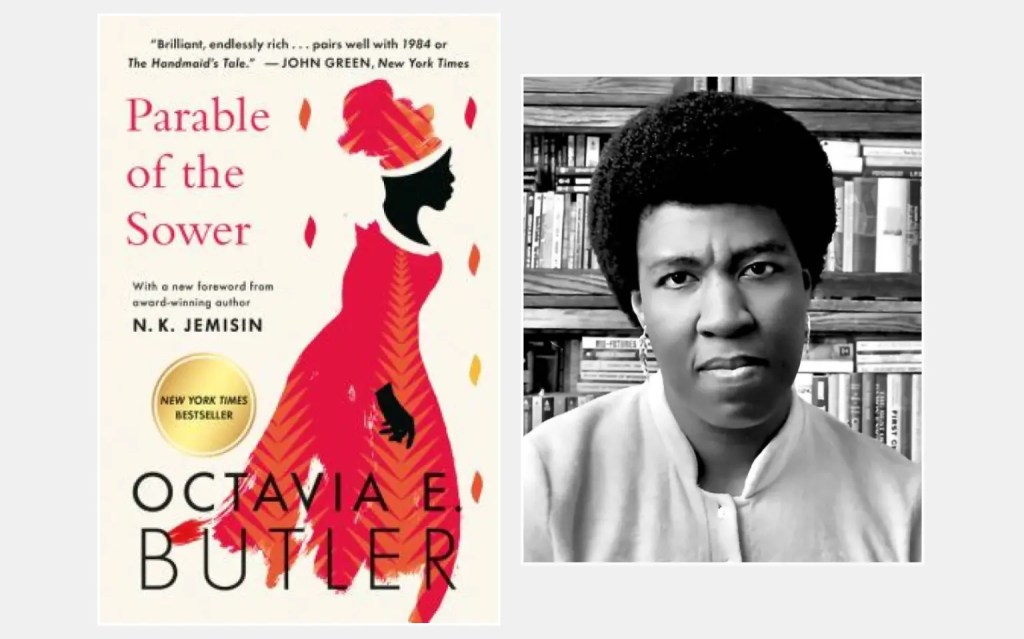
Courtesy of the Seattle Public Library; courtesy of the Octavia E. Butler Estate

In 1993, a groundbreaking work of speculative fiction offered a terrifying glimpse into a near-future America ravaged by climate change, economic collapse, and social unrest. At the time, Octavia E. Butler’s Parable of the Sower was critically acclaimed but remained a powerful, albeit niche, entry in the science fiction canon. Yet, almost three decades later, the novel performed a feat nearly as astonishing as its foresight: it became a surprise best-seller, soaring onto the New York Times list in 2020. This unexpected resurgence was not merely an act of good timing; it was a collective public realisation that the world Butler had so meticulously envisioned was no longer a distant possibility, but a chillingly accurate reflection of our own.

For writers, this story offers a masterclass not only in world-building but in the very purpose of fiction. Butler’s work demonstrates how the most effective speculative narratives are not detached fantasies but logical, extrapolated projections of our present reality. Her novel is a testament to the power of a writer’s unflinching gaze—the ability to look at existing social ills and trace them to their harrowing, yet logical, conclusion. In doing so, she provides a powerful model for how to craft a story that serves not only as a cautionary tale but as a blueprint for resilience. It is a work that asks, and attempts to answer, the most urgent question of our time: once a world begins to fall apart, what does it take to build a new one from its ashes?

The prophetic power of Octavia Butler’s writing is rooted in the stark realities of her own life. Born in Pasadena, California, in 1947, she grew up in a city that, while not legally segregated, maintained de facto racial and social divisions. Her early life was marked by poverty; her father, a shoe shiner, died when she was seven, and she was raised by her mother, a domestic worker, and her grandmother. Butler’s experience of accompanying her mother to wealthy homes and being forced to enter through the “back door” left an indelible mark on her psyche, a direct observation of systemic inequality that would later form the thematic bedrock of her work. She would later attempt to resolve these feelings in her most famous novel, Kindred, but the critique of social stratification is even more explicit in the world of Parable of the Sower.

Butler also had to overcome significant personal challenges to find her voice. She struggled with dyslexia as a child, a condition her teachers often misinterpreted as a lack of effort. Despite this, she was a voracious reader, devouring everything from the literary to the mundane. Her lifelong dream of writing was sparked at the age of nine after she saw a B-movie, Devil Girl from Mars, and thought to herself, “Geez, I can write a better story than that!”.

This moment of creative defiance set her on a path of relentless discipline. She began trying to sell her stories at the age of thirteen, but her early stories were so unconventional that many teachers accused her of having copied them. Her journey to becoming a professional writer was arduous, marked by years of rejection and a series of menial jobs, including telemarketer, potato chip inspector, and dishwasher. Throughout this period, she maintained a punishing schedule, rising at two o’clock in the morning to write before heading to work. This personal history of struggle, persistence, and an unwavering commitment to her craft shaped her literary vision, which always approached the science fiction genre “self-consciously as an African American woman marked by a particular history”.

The political and social critiques embedded in Parable of the Sower are thus deeply personal. The novel’s portrayal of a society divided by literal and figurative walls—where the privileged are insulated within gated communities while the poor and homeless are left to fend for themselves—is a direct echo of her childhood experiences. By transforming her personal experience with segregation and classism into a global social collapse, Butler elevated her work from mere fiction to a searing critique.

Parable of the Sower weaves a complex tapestry of interconnected themes that collectively form a philosophical framework for survival. The novel is less a simple post-apocalyptic narrative and more a thoughtful examination of how societies collapse and how new ones can be built from the ruins. For writers, it provides an example of how to anchor a fictional world with a compelling and consistent philosophy.

The central philosophical tenet of the novel is Lauren Olamina’s new religion, Earthseed, whose core scripture proclaims, “God Is Change”. This belief is a radical departure from the static, traditional Christian faith espoused by her father, which Lauren finds untenable in a world unravelling around them. For Lauren, resisting change is an act of denial that invites a destructive transition. Earthseed posits that change is the only constant and the only lasting truth.

This is not a passive acceptance of fate but an active mandate to engage, shape, and intentionally influence change to achieve transformative results. The novel argues that in a turbulent world, only those who demonstrate “resiliency” and “ongoing individual adaptability” are best able to survive and thrive. This adaptability is manifested through hard work, education, purpose, kindness, and community, which collectively breed a more tangible form of hope than blind faith in a “capricious and, in her mind, uncaring Christian God”. This philosophical framework provides a moral and practical compass for the characters, transforming a story of survival into a chronicle of evolution.

Despite the backdrop of environmental devastation, social decay, and constant violence, the novel is underpinned by a continuous thread of rebirth, regeneration, and rebuilding. Lauren observes life-affirming acts, such as people getting married and having children, even as fires rage across the land. This cyclical view of destruction and creation is central to the Earthseed philosophy. The concept is explicitly symbolised when Lauren raises the notion of a phoenix being reborn from its own ashes before her community is burned to the ground. The theme is further reinforced by the sermon her father gave on Noah’s perseverance in the face of God’s impending destruction. Following the fire that razes Bankole’s land, the group immediately begins to reseed the arable land and rebuild lost houses, embodying the principle that new life can emerge from the ashes of the old.

Parable of the Sower presents a sharp critique of individualism by contrasting the self-interested residents of Lauren’s walled community, Robledo, with the nascent, altruistic society she forges. The walled enclave, a microcosm of societal collapse, is populated by individuals who, driven by self-interest, betray neighbours and neglect children. Their isolationist mindset and rigid adherence to old social constructs prove “untenable” in a world that has fundamentally changed. In stark contrast, the Earthseed community Lauren builds is founded on collective purpose, kindness, and the principle of putting the “group ahead of the individual”. The journey itself, which forces strangers to band together and rely on one another, is the crucible for this new social model.

For writers of social commentary, the lesson of Parable of the Sower is that a compelling dystopia doesn’t require a single, cataclysmic event. Butler’s world is not the result of a nuclear war or a zombie plague but a slow-motion unravelling, disintegrating bit by bit. This societal decay is a direct consequence of the interconnected crises of global warming, growing wealth inequality, and corporate greed. The novel critiques late-stage capitalism and the neo-conservative assault on the welfare state by depicting a world where public services have been privatised, leading to the rise of company towns that recruit people into a form of modern slavery. As the economy collapses, society devolves into lawlessness, with armed gangs, drug addiction, and rampant violence filling the power vacuum.

This portrayal grounds the novel not in fantasy but in a logical, if terrifying, extension of present-day trends. The novel’s recent success is a direct consequence of this frighteningly realistic vision that contemporary readers find all too recognisable. As the world grapples with a deepening climate crisis, political demagoguery, and the rise of populism, Parable of the Sower functions as a warped mirror of where we already are.

The Plain and the Poetic: Butler’s Stylistic Mastery

Octavia Butler’s writing style in Parable of the Sower is a study in contrast, serving as both a narrative device and a reflection of the novel’s core philosophical framework. The narrative is presented as Lauren Olamina’s personal journal, a choice that gives the prose a deceptively simple quality. The writing is plain and straightforward, eschewing ornate language and complex sentence structures in favour of basic “Subject-Verb-Object” construction. Lauren just wants to tell you the truth, and the raw, unadorned nature of her prose makes the harrowing, intense events of the novel feel all the more visceral and authentic. The journal format also blurs the line between fiction and reality, with Lauren noting that reading science fiction helps her to understand her own world, a clever meta-fictional gesture by Butler herself.

This plain prose, however, is juxtaposed with the poetic and philosophical verses of Earthseed, which are distilled into a form that resembles scripture. These verses, presented in short, broken lines, are simple in their content but weighty in their meaning, serving to heighten the seriousness and the emotion of Lauren’s philosophical realisations. This stylistic duality is far from a mere aesthetic choice. It embodies the novel’s central argument: that to survive a profound crisis, one must attend to both the brutal, material realities of the present and the guiding, abstract principles of a new philosophy. The plain prose represents the raw struggle for survival, while the poetic verse provides the higher purpose that makes that struggle meaningful. It suggests that a new society cannot be built on pragmatism alone; it requires a compelling vision to strive towards. By combining these two distinct styles, Butler creates a narrative that is both grounded in reality and soaring in its philosophical ambition, a form that perfectly mirrors the novel’s central argument for a union of practical action and moral purpose.

The enduring impact of Parable of the Sower is a remarkable testament to its foresight. Upon its initial publication in 1993, the novel was critically acclaimed, earning a place on the New York Times Notable Book of the Year list in 1994 and a Nebula Award nomination. However, its success was a slow burn, finding its dedicated audience among science fiction fans, Black readers, and feminists. The novel’s true cultural moment arrived nearly three decades later when it became a New York Times best-seller, transforming the novel from speculative fiction into a chillingly accurate reflection of contemporary reality. The novel has since been adapted into an opera and a graphic novel, while NASA honoured Butler’s influence by naming the Mars rover’s touchdown site “Octavia E. Butler Landing”.

The central insight of the novel is that environmental degradation is not a stand-alone crisis but is inextricably linked to socio-economic and political decline. The book meticulously details how climate change-induced droughts, water scarcity, and extreme weather events lead to a loss of agricultural land, which in turn makes food scarce and people more selfish. This scarcity creates an unpleasant social environment, full of fear and distrust, which exacerbates existing social divisions and leads to lawlessness. The novel’s portrayal of climate migration, with Lauren and her companions forced to travel for survival, is a central part of this and echoes the real-world experiences of millions of people who have been internally or internationally displaced by climate change, particularly those in Central America who are migrating due to droughts.

Unlike many cli-fi novels that are oddly quiet about what initially brought the world to the brink of collapse, Butler’s work explicitly engages with the socio-economic origins of climate catastrophe. This places her in a category with authors like Kim Stanley Robinson, who understand that climate change is a socio-political, not just an environmental, problem.

Perhaps the most controversial and debated element of the novel is the Earthseed philosophy’s ultimate goal: the Destiny of humankind is to take root among the stars. Critics have argued that this vision of space colonisation is a form of escapist libertarian frontierism that undermines the novel’s commitment to solving problems on Earth. This perspective views the Destiny as a selfish, Elon Musk-esque fantasy that is disingenuous to the struggles of marginalised communities and fails to offer a practical solution for the planet’s problems.

However, a more nuanced reading of the novel presents a compelling counterargument. From this perspective, the pursuit of an interstellar destiny is not an act of escape but an evolutionary necessity. It argues that caring for Earth and reaching for the stars are not “mutually exclusive” but “mutually dependent” goals. The grand challenge of colonising another planet could provide the “perspective from outside of Earth” needed to develop the social, technical, and legal systems required to preserve our home planet. In this view, Destiny is a tool and a secular vision for building a more compassionate and inclusive society, free from the conflicts that have plagued humanity on Earth. The ambiguity of this conclusion forces the reader to grapple with a complex question: what kind of grand vision is necessary to motivate a species to overcome its self-destructive tendencies?

Write Your Way to Well-being: The Benefits of Journaling

For most writers, the journal is a place for capturing a fleeting idea, working out a tricky plot point, or simply recording the day’s events. But what if that simple act of putting pen to paper (or fingers to keyboard) is doing far more than helping you with your craft? What if it’s a powerful tool for improving your health?

The practice of personal writing has evolved from a simple way to chronicle daily life into a scientifically supported method for managing mental and physical well-being. This post explores the health benefits of journaling, offering insights into why this creative practice is more than just a personal log.

A Tale of Two Notebooks: The Diarist vs. The Journal Keeper

To appreciate the therapeutic benefits of personal writing, it’s helpful to understand the difference between two of its most common forms: the diary and the reflective journal. Although they appear similar, they serve fundamentally different purposes.

A diary is defined by its descriptive and chronological nature. Its main purpose is to keep a factual, day-by-day log of daily activities and experiences, such as where you went and what you did. Entries are usually simple, focused on recording events for later reminiscing or for tracking things like health or personal history.

In contrast, a reflective journal is more introspective and thematic. While it may contain elements of a diary, its core purpose is to explore the “why” and “how” behind your experiences. It’s a vehicle for exploring thoughts, making sense of emotions, and forming connections between your inner feelings and external events. This type of writing is more expressive, less structured, and can include anything from philosophical ideas to sketches or disconnected notes. It’s a tool for self-authorship — a record of your personal development, plans, and aspirations.

The Health Benefits of Putting Pen to Paper

The simple act of writing can have a wide range of positive effects on both your mind and body. Studies have shown that when you write about your deepest thoughts and feelings, you can improve your physical and emotional health.

For the Mind:

  • Stress and Anxiety Relief: Journaling is a powerful stress management tool that can reduce symptoms of anxiety and feelings of distress. It provides an outlet for emotional release, which can untangle chaotic thoughts and break the cycle of obsessive thinking. Writing helps create the necessary distance to look at your thoughts objectively, rather than being overwhelmed by them — a process known as cognitive defusion.
  • Emotional Regulation and Self-Awareness: By consistently articulating your feelings and experiences, you gain a deeper understanding of your inner world. This enables you to recognise recurring patterns in your thoughts and emotional responses, offering valuable insights into your triggers, strengths, and weaknesses. This heightened awareness leads to healthier emotional regulation and a reduction in feelings of overwhelm and stress.
  • Resilience and Problem-Solving: Journaling is an effective way to build resilience—the ability to cope with adversity and transform challenges into personal growth. By writing about your setbacks and small wins, you can clarify what drains or restores your energy. The process of reflecting on challenges from a new perspective allows you to reframe obstacles as opportunities for growth and reinforces your coping mechanisms.
  • Cognitive Boost: The benefits extend to your cognitive function. Writing can enhance cognitive processing and help organise chaotic thoughts into a coherent narrative. Research suggests that writing information down by hand, in particular, can improve memory recall and critical thinking skills. It has even been linked to higher grade averages for students who use learning journals.

For the Body:

The mind-body connection is a core part of the therapeutic value of journaling. The act of writing down and processing difficult emotions can ease the physical and mental burden of suppressing them. This process directly impacts the body’s stress response system.

  • Studies show that regular journaling can reduce cortisol levels—the body’s primary stress hormone—by up to 23% in some cases.
  • Writing can also boost immune system functioning, as measured by antibody response, and lower blood pressure.
  • Practising gratitude journaling, specifically, has been linked to improved sleep quality and duration.

For individuals with depression, expressive writing and gratitude journaling can be a valuable supplement to treatment, with research suggesting it can reduce depressive symptoms. Gratitude journaling works by retraining your attention to focus on the positive aspects of life, which can counter the negative bias often found in depression and anxiety and lead to a more optimistic outlook.

For those struggling with trauma and Post-Traumatic Stress Disorder (PTSD), journaling can be a particularly effective intervention. A retired soldier who used writing to cope with PTSD described the process as “de-fragmenting a hard disk,” where chaotic, fragmented memories became more organised and easier to deal with. Journaling allows individuals to continue their healing process outside of formal therapy, providing a safe and private space to process emotions. It can reduce symptoms of anger, distress, and PTSD, and the entries can even serve as a starting point for discussion during therapy sessions.

Journaling has also been shown to have a positive impact on the mental health of people living with chronic conditions. While it may not directly impact physical symptoms, writing can help manage the psychological challenges that accompany physical illness, such as stress, mood fluctuations, and feelings of depression.

A Writer’s Toolbox: Finding the Right Technique

Just as there are many genres of writing, there are different journaling techniques to support various needs and goals.

  • Expressive Writing: If you need to process a deeply upsetting or traumatic experience, expressive writing is your tool. It’s a way to express feelings in an unfiltered manner, serving as a “soundproof room” to unleash your authentic emotions.
  • Gratitude Journaling: This practice involves writing down the positive aspects of your life to shift your focus from challenges to appreciation. It’s an effective way to improve your mood, lower levels of depression, and cultivate an optimistic outlook.
  • Free Writing / Stream of Consciousness: For clearing mental clutter and unlocking creativity, this unstructured style is a direct conduit to your mind’s inner workings. It encourages you to pour out your thoughts without boundaries or set topics, which can uncover unexpected insights and new ideas for your work.
  • Strength Journaling: This technique focuses on reinforcing your personal strengths by exploring how you have used them in everyday life. It builds confidence and promotes a focus on your positive traits.

How to Build a Journaling Habit That Sticks

For journaling to be a lasting and beneficial practice, it must be simple and consistent. Inconsistency disrupts emotional processing and self-awareness. Start small—just 5 minutes a day is enough to build momentum. Consider pairing it with an existing daily habit, like your morning coffee, and keep your journal in plain sight to remind you.

Perhaps most importantly for writers, it is crucial to avoid a few common pitfalls. Journaling can sometimes make things worse if it leads to rumination—the act of endlessly rehashing the same negative thoughts and problems without seeking solutions. This can exacerbate mental health issues. For journaling to be therapeutic, it must be a vehicle for solutions, not blame. The goal is to frame negative events positively, considering what you can learn from them and what opportunities they present.

A Final Word

The simple act of writing, whether to process a traumatic event or simply record the day, is a powerful tool for holistic health. It’s a way to move from a state of emotional and neurological inhibition to one of cognitive and psychological integration. It can calm the parts of your brain that process stress and emotion, helping to form new, healthier neural connections.

The evidence consistently points to the profound and wide-ranging benefits of this enduring practice. For writers, it offers more than just material; it’s a way to actively improve your emotional regulation, build resilience, and, in doing so, to author a more resilient and meaningful life, both on and off the page.

The Booker Dozen: The Authors Behind the 2025 Longlist

The Booker Prize is arguably one of the most significant literary accolades in the English-speaking world, a beacon that shines a light on fiction’s most compelling voices. For writers, making the longlist – the esteemed “Booker Dozen” – is a career-defining moment, a testament to months, if not years, of dedicated craft. This year, the 2025 longlist, unveiled on 29th July, has truly delivered a “wonderful heap” of novels, as described by this year’s chair of judges, the inimitable Roddy Doyle.

This year’s selection is a rich tapestry, featuring authors from four continents and nine countries, notable for its blend of experience and fresh perspective. We have one previous Booker winner, Kiran Desai, making a return, alongside two debut novelists, Ledia Xhoga and Maria Reva.

Claire Adam: Love Forms

Trinidad and Tobago native Claire Adam makes her second appearance in the literary spotlight with Love Forms. Her debut, Golden Child, won the Desmond Elliott Prize in 2019, marking her as a distinctive voice. In Love Forms, Adam delves into the profound emotional landscape of a woman grappling with the consequences of a decision made in her youth: giving up a child for adoption. Expect an intimate, profoundly human story that explores the enduring power of family and the paths not taken.

Tash Aw: The South

Malaysian author Tash Aw is no stranger to literary acclaim, having won the Whitbread Book Awards First Novel Award in 2005 for The Harmony Silk Factory. The South is the ambitious first instalment in a planned quartet, setting its narrative in 1990s Malaysia. Here, Aw expertly weaves the lives of two farming families against a backdrop of rapid modernisation and the nascent, yet increasingly urgent, threat of climate change. It’s a novel that promises to be both a sprawling family saga and a potent commentary on environmental and societal shifts.

Natasha Brown: Universality

British author Natasha Brown exploded onto the literary scene with her debut, Assembly, a Betty Trask Award winner. Her follow-up, Universality, is the shortest book on the longlist at a concise 156 pages, yet it packs a powerful punch. This highly stylised novel is described as a merciless satire of the contemporary media landscape, chronicling a viral long-read. Brown’s work is sharp, incisive, and unafraid to tackle pressing social themes with a minimalist, yet impactful, prose.

Jonathan Buckley: One Boat

With One Boat, Jonathan Buckley presents his thirteenth novel, showcasing a prolific and consistently inventive career. A British author, Buckley previously won the Novel Prize in 2022 for his book Tell. His latest offering takes readers on a philosophical journey to Greece, where a woman navigates her grief. It’s a novel that promises deep reflections on ethics, memory, and the very nature of thought, delivered with Buckley’s characteristic intellectual rigour and elegant prose.

Susan Choi: Flashlight

Pulitzer Prize-winning American author Susan Choi brings her formidable talent to the longlist with Flashlight. Choi’s ability to craft intricate narratives is well-established, and this novel is no exception. Flashlight illuminates the far-reaching effects of political upheaval on a family with deep roots in Korea, Japan, and the United States. It’s a testament to her skill that online communities are already hailing it as “amazing” and “probably the best book I’ve read this year.”

Kiran Desai: The Loneliness of Sonia and Sunny

Perhaps the most anticipated return to the Booker stage, Kiran Desai is the sole previous winner on this year’s longlist, having won in 2006 for The Inheritance of Loss. After a nineteen-year hiatus, Desai returns with The Loneliness of Sonia and Sunny, a colossal 650-plus page epic. This vast novel is described as an intricate portrait of an interconnected world, painted with an exquisitely fine brush. Its sheer scope and Desai’s celebrated prose make it an undeniable frontrunner and a significant literary event.

Katie Kitamura: Audition

American author Katie Kitamura, whose novel Intimacies won France’s Prix Litteraire Lucien Barriere in 2023, brings her enigmatic style to the Booker longlist with Audition. This formally innovative novel employs contradictory narratives to explore themes of identity and perception, promising a thought-provoking and subtly unsettling reading experience. Readers have already been drawn into its “tricksy story,” sparking lively debates and interpretations.

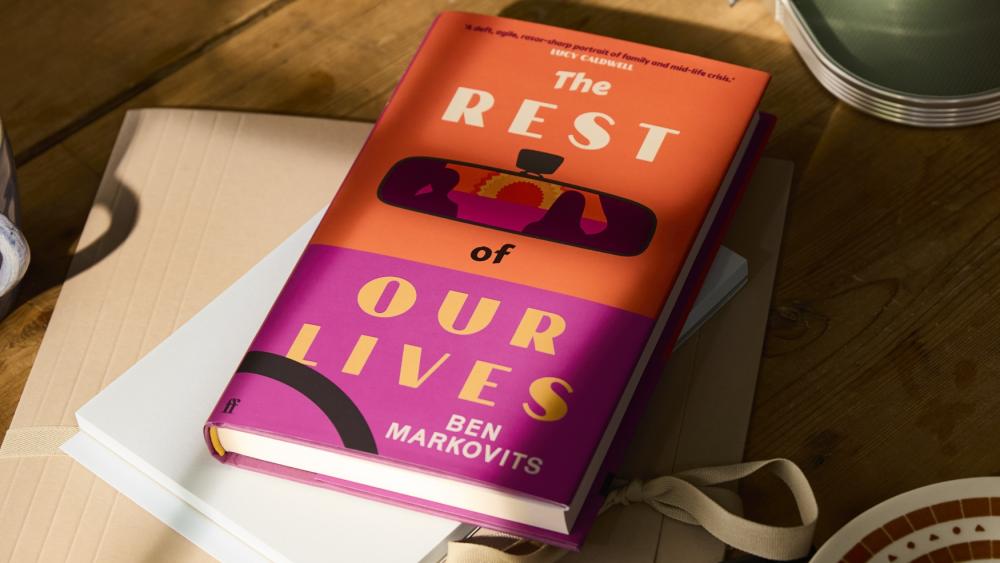
Ben Markovits: The Rest of Our Lives

Former professional basketball player turned acclaimed author, American Ben Markovits previously won the James Tait Black Prize for Fiction in 2016. His latest, The Rest of Our Lives, is a poignant study of a father in the throes of a mid-life crisis as his children begin to leave home. Markovits excels at sensitive character studies, and this novel is poised to be a deeply resonant exploration of family, ageing, and the quiet shifts in personal identity.

Andrew Miller: The Land in Winter

British author Andrew Miller is celebrated for his atmospheric and deeply immersive historical fiction, having won the James Tait Black Prize for his 1997 novel, Ingenious Pain. In The Land in Winter, Miller transports readers to the UK’s “Big Freeze” of 1962-63, painting a vivid picture of two married couples in post-war England. His prose is praised for its ability to create a strong sense of place and to delve deep into the hearts of his characters, promising a rich and absorbing read.

Maria Reva: Endling

One of the two exciting debut novelists on the list, Canadian-Ukrainian author Maria Reva presents Endling, a novel that has captivated early readers. What begins as a “comic caper” takes a dramatic and profound turn as the full-scale Russian invasion of Ukraine “blows the book wide open,” forcing a re-evaluation of fiction’s purpose and the characters’ lives within it. Online forums have lauded it as “superb” and the “most interesting” book on the list, marking Reva as a powerful new voice.

David Szalay: Flesh

Hungarian-British author David Szalay, a Betty Trask Award winner for his debut in 2008, brings a truly unique offering with Flesh. This modern “everyman” story follows its central character, István, through a Hungarian childhood, military life, and on-the-make London. What sets it apart is its “unusual tactic” of “utterly refusing interiority,” keeping István’s inner life a mystery to the reader. This stylistic choice has been lauded as a genuinely new approach to fiction, making Flesh a compelling and innovative read.

Benjamin Wood: Seascraper

British author Benjamin Wood, who won France’s prix du roman Fnac in 2014, offers a quiet yet profoundly atmospheric novel in Seascraper. The book follows a young man who scrapes the seashore for shrimp in a changing England, using muted prose to evoke a powerful sense of place and the subtle shifts within both nature and human lives. It promises a contemplative and beautifully crafted narrative.

Ledia Xhoga: Misinterpretation

The second debut novelist to grace the longlist, Albanian-American Ledia Xhoga presents Misinterpretation. Xhoga, who previously found success as a playwright and won the 2024 New York City Book Award for outstanding debut author, brings her unique perspective to this portrait of an Albanian interpreter in New York. The novel delves into the complexities of translation, cultural duality, and the quiet burdens of compassion fatigue. It’s a timely and insightful exploration of language and identity in a globalised world.

The Power of the Booker

The Booker Prize longlist isn’t just a collection of great books; it’s a conversation starter, a literary compass, and a powerful platform for writers. For each of these thirteen authors, it represents not only a significant recognition of their craft but also a massive boost in readership and critical attention.

The judges – chaired by Roddy Doyle, and including Ayọ̀bámi Adébáyọ̀, Sarah Jessica Parker, Chris Power, and Kiley Reid – have clearly prioritised narrative strength, compelling characters, and a willingness to engage with the complexities of our “shaky present.” Their dedication to unearthing a “wonderful heap” of diverse and thought-provoking fiction is evident.

What Comes Next?

While we celebrate these authors and their books, the Booker journey is far from over. The next date is Tuesday, 23rd September 2025, when the six-book shortlist will be announced at the Southbank Centre’s Royal Festival Hall in London – a new public event for the prize. Then, the literary world will hold its breath until Monday, 10th November 2025, when the winner will be named at Old Billingsgate, London.

The Architect of Dreams: Unravelling the Narrative Genius of Moebius

Jean Giraud. The name might not immediately resonate with everyone, but mention ‘Moebius’, and a universe of intricate, surreal, and breathtaking imagery springs to mind. This French graphic novelist, who sadly passed in 2012, was a titan of visual storytelling, a true visionary whose influence stretched far beyond the pages of comics, touching the very fabric of cinema, video games, and art itself. He was, in essence, two artists in one, a master craftsman known as ‘Gir’ and an unbound explorer known as ‘Moebius’, each persona a distinct facet of his unparalleled narrative architecture.

But how did one man cultivate such a profound duality, and more importantly, how did he build stories that continue to captivate and challenge audiences decades later? Let’s delve into the fascinating world of Jean Giraud and discover the secrets behind his narrative alchemy.

The Genesis of a Visionary: From Paris to the Desert

Born in a Parisian suburb in 1938, Giraud’s early life, marked by his parents’ divorce and upbringing by his grandparents, may have subtly laid the groundwork for his later adoption of distinct artistic personae. His childhood passion for Western films ignited his creative spark, leading him to sell his first story at the tender age of 15.

A pivotal moment arrived during a nine-month stay in Mexico, where the vast, desolate desert landscapes left an indelible impression on his mind. This experience of loneliness and introspection became a recurrent catalyst for his creative and personal growth, a symbolic blank canvas for infinite possibilities. Later, military service in Germany and Algeria further broadened his horizons, exposing him to exotic cultures that would infuse his later, more fantastical works. Upon his return, he honed his disciplined craft under the tutelage of Belgian artist Joseph Jijé Gillain, a crucial foundation for everything that followed.

Two Sides of a Coin: Gir and Moebius

The defining characteristic of Giraud’s career was his deliberate cultivation of two distinct artistic identities.

As ‘Gir’, he became a master of realistic, meticulously detailed brushwork, most famously in the Blueberry series, co-created with writer Jean-Michel Charlier in 1963. Blueberry was a Western that dared to subvert the genre’s norms. Mike S. Blueberry was no clean-cut hero; he was dirty, ugly and bad-tempered, a character who drank, smoked, gambled, and swore. What truly set Blueberry apart was its commitment to depicting lasting, irrevocable change in its protagonist. Blueberry aged, his face weathered, reflecting the harsh realities of his life and the unfolding history of the American West. This rigorous discipline in traditional storytelling provided Giraud with an unparalleled technical bedrock, allowing him to understand the ‘rules’ before he consciously chose to ‘break’ them.

Then came ‘Moebius’. First appearing in illustrations for the satirical magazine Hara-Kiri in the early 1960s, this pseudonym truly blossomed in 1974 with the co-founding of Métal Hurlant magazine. As Moebius, Giraud shed the constraints of realism, embracing loose and spontaneous penwork to explore the subconscious and create hitherto unseen vistas. This was the vehicle for his groundbreaking, often nonlinear works, such as Arzach, Le Garage Hermétique (The Airtight Garage), and L’Incal. The name ‘Moebius’ itself, chosen somewhat playfully, symbolised a twisted loop of paper and his one continuous, entwined identity as an artist, perfectly encapsulating his approach to narrative.

This strategic duality wasn’t just a stylistic choice; it was a profound mechanism for creative liberation. ‘Gir’ provided commercial stability, allowing ‘Moebius’ the freedom to experiment without commercial pressure, leading to an unparalleled breadth in his artistic output.

Architect of Imagined Realities: Moebius’s World-Building Mastery

Moebius was a visionary universe builder, infusing science fiction with an intense blend of reality and spirituality. His worlds were consistently described as detailed, dreamlike and simultaneously strange and familiar. He approached world-building with graphic spontaneity and improvisation, yet advised artists to make notes about the particulars of the world depicted to provide readers with recognisable characteristics. This suggests that even his most surreal worlds were underpinned by an internal logic.

Take The Incal, his epic space opera with Alejandro Jodorowsky. Set in a dystopian capital city within a human-dominated galactic empire, it vividly portrays a stratified society, with the fortunate at the top and The Others (mutants) living in misery below. This world features TV programmes showing filmed violence, a populace addicted to a love drug, and a president who undergoes repeated body transplants – a biting satire on societal control and consumerism. Moebius’s intricate cityscapes, massive spacecraft, and diverse inhabitants bring this allegorical world to life, making it a tangible backdrop for the protagonist’s fantastic spiritual journey.

Then there’s The Airtight Garage, one of his most experimental and personal comics. This narrative follows Major Grubert navigating a fantastical, self-contained universe within a hollow asteroid, comprising various pocket worlds across three levels. What’s remarkable is that it was created without a planned plot. Giraud described drawing sequences without any logical sense and then attempting to reconstruct them into a narrative. He intentionally introduced continuity problems each month, challenging himself to solve them, a process he called narrative kintsugi. This resulted in a narrative that is nearly impenetrable yet charming, a psychedelic, sequential romp that explores profound philosophical questions regarding the nature of existence and the relationship between author and creation.

The recurring motif of the desert, stemming from his transformative experience in Mexico, is central to his world-building philosophy. He equated the virginity of a simple sheet of paper to the desert, a boundless space for artistic choices and creation. This suggests that his worlds are not just external settings, but direct manifestations of his internal psychological and philosophical explorations, inviting readers on their own introspective journeys.

The Human and the Archetypal: Character Development

Giraud believed that for readers to connect with a story, characters must feel as if they have a life and personality of their own. He saw the human body as a narrative canvas, asserting that it transforms when brought to life, containing a ‘message in its structure… in every wrinkle, crease or fold of the face and body’, making character drawing a study of life. He stressed that artists must cultivate compassion and a love for humanity through profound observation to become a mirror of society and humanity.

As ‘Gir’, he revolutionised the Western hero with Mike S. Blueberry. Unlike the fearless lawmen of convention, Blueberry was dirty, ugly and bad-tempered, a deliberate subversion. Crucially, Blueberry was subject to the relentless force of time; his youthful looks faded, and his face became increasingly weathered, reflecting the lasting and irrevocable changes he endured. He evolved from a rebellious soldier to a jaded marshal, a fugitive, and a bitter cynic, becoming a pawn caught in a cruel web of fate. This commitment to depicting genuine, often painful, evolution was groundbreaking for the comics industry.

In contrast, The Incal‘s protagonist, John Difool, is a shambolic private eye and reluctant protagonist. Prone to mood swings and self-doubt, his name is a pun on John, the Fool, referencing the Tarot archetype. As the narrative progresses, Difool undergoes a profound transformation, becoming more heroic as he reluctantly accepts his fantastic spiritual journey. This evolution is central to the story’s allegory for repeating sins, the futility of complacency and the necessity for individual transformation.

Major Grubert in The Airtight Garage evolves in a humorous yet philosophical manner. As the creator of his world, his bizarre adventures serve as a meta-narrative, exploring the intricate relationship between the author and their creation. His development is less about linear progression and more about embodying the philosophical questions inherent in the act of creation itself.

Giraud’s meticulous attention to visual cues was paramount. He noted the difficulty of drawing people talking, as it involves a series of tiny movements — small yet with real significance, which speak to personality and life. He contrasted this with the generic gestures of superheroes. Even the clothing of the characters and their materials, the textures were equally important, conveying a vision of their experiences, of their lives, their situation in the adventure without words.

Beyond the Panel: Narrative Innovations

The term ‘Moebius’ has come to define a specific narrative structure characterised by twists and turns in unexpected ways, often leading to a non-linear or circular storytelling approach. Named after the Möbius strip, this style reflects how his stories can loop back on themselves, creating a distinctive reading experience. This non-linear structure actively enhances reader engagement by encouraging them to actively participate in piecing together the plot.

The Incal famously employs a circular narrative, with John Difool falling from a bridge at both the beginning and end, symbolising descent, ascent, and re-descent.

The Airtight Garage further exemplifies this with its surreal, fragmented storytelling and Giraud’s deliberate breaking of continuity, which challenges him, resulting in a narrative with a potentially unlimited incoherence factor. This approach allows characters to experience time loops or alternate realities, adding layers of complexity.

One of Moebius’s most radical innovations was the creation of wordless comics, with Arzach being the prime example. This collection of four wordless short stories was a bold move that truly showcased his passion for the genre. Following a silent warrior on a pterodactyl-like creature through a strange, desolate landscape, Arzach‘s imagery is often compared to dreams or the subconscious, demonstrating the power of pure visual storytelling to evoke complex emotions without the need for dialogue.

Giraud meticulously controlled the pacing and visual rhythm of his narratives. He asserted that the narration must harmonise with the drawings. The placement of your text must create a visual rhythm. The rhythm of your plot should be reflected in your visual cadence and the way you compress or expand time. He mastered panel layout: larger panels slowed the pace for contemplation, while smaller ones quickened it for urgency. The arrangement of panels, the size of the ‘gutter’ (the space between panels), and visual elements like colour, texture, and composition all contributed to the narrative flow and emotional resonance.

A hallmark of Moebius’s storytelling is his commitment to imbuing his graphic elements with abstract layers, giving equal importance to both the graphic elements and their abstract layers. His illustrations transcended mere plot progression, allowing readers to feel and reflect on the transcendence of life. This approach, comparable to that of H.P. Lovecraft and Douglas Adams, utilises science fiction to explore the inexplicable and otherworldly, seeking deeper meanings and a sense of wonder. His collaborations, such as The Incal, utilised his art for poetic, obscure, and surreal narratives, guiding the audience on a path to personal enlightenment.

The Enduring Legacy of a Narrative Alchemist

Jean Giraud, through his dual identities of Gir and Moebius, fundamentally reshaped the landscape of graphic storytelling. His career was a remarkable synthesis of meticulous craft and unbridled creative freedom. As Gir, he laid a robust foundation in traditional sequential art, delivering gritty realism and evolving character arcs. This disciplined practice instilled in him a profound understanding of narrative mechanics and visual communication.

The emergence of Moebius marked a radical departure, allowing Giraud to explore non-linear narratives, wordless comics, and deeply philosophical themes embedded within surreal, fantastical worlds. His approach to world-building transcended mere setting, becoming an externalisation of internal psychological and spiritual explorations, inviting readers into introspective journeys. His characters, whether the evolving anti-hero Blueberry or the reluctant spiritual guide John Difool, served as vehicles for profound societal commentary and universal human questions, their visual details conveying rich inner lives.

His innovations in pacing, visual rhythm, and the integration of abstract layers within his artwork fundamentally pushed the boundaries of sequential art and his ability to convey complex meaning and evoke deep emotional responses through pure imagery, without relying solely on words, established a new paradigm for the medium. This pioneering spirit extended beyond comics, deeply influencing filmmakers, video game designers, and artists across various disciplines, thereby broadening the scope of visual storytelling.

Jean Giraud’s legacy is that of a true narrative alchemist, one who transmuted personal experiences, rigorous artistic discipline, and boundless imagination into groundbreaking visual stories that continue to challenge, inspire, and redefine the possibilities of human expression.

The Art of Storytelling: Granta’s Enduring Impact

Granta has, for over a century, been a vital home for new writing, a mirror reflecting societal shifts, and a launchpad for some of the most significant voices in contemporary literature. From its unassuming beginnings as a student publication to its current stature as an international literary powerhouse, Granta‘s journey is a compelling narrative of evolution, bold editorial vision, and an unwavering belief in the power of the story.

Granta‘s origins are rooted in the halls of Cambridge University, where it was founded in 1889 by students and initially named The Granta after the local river. It began as a lively periodical featuring student politics, witty conversation – known as “badinage” – and nascent literary efforts. This foundational period established Granta‘s commitment to intellectual discourse and creative expression, setting the stage for its future prominence. Even in these early days, the magazine served as a nursery for future literary stars, publishing early works by writers who would later become household names, including A.A. Milne, Michael Frayn, Stevie Smith, Ted Hughes, and Sylvia Plath. This demonstrates that even a seemingly niche or local platform, when dedicated to quality and providing a space for literary enterprise, can become a crucial early incubator for significant talent. The initial focus on “badinage” also hinted at an early, irreverent spirit, a characteristic that would resurface and define its later, more prominent incarnation.

However, by the 1970s, the publication faced severe financial difficulties and increasing student apathy, teetering on the brink of irrelevance. This precarious period underscored the inherent challenges faced by literary ventures and highlighted the critical need for radical intervention to ensure its survival and future impact. The magazine’s struggle illustrated that even a publication with a storied past and a history of nurturing talent could falter without a dynamic adaptation to changing times.

A pivotal moment in Granta‘s history was in 1979 when it was relaunched as a literary quarterly in paperback format. This transformation was spearheaded by a group of postgraduates, most notably Bill Buford and Peter de Bolla. The choice of a paperback format was a deliberate decision, making the magazine more accessible and distinguishing it from traditional academic journals, lending it the gravitas and permanence of a book.

Buford’s editorial vision was assertive and polemical. The first issue under their editorship was tellingly titled New American Writing, featuring authors like Joyce Carol Oates and Susan Sontag. Buford openly critiqued contemporary British fiction as “neither remarkable nor remarkably interesting” and suffering from “uninspired sameness.” He aimed to fill a “cultural gap” in Britain by introducing “challenging, diversified, and adventurous” American fiction. His focus later extended to “Dirty Realism,” a style characterised by “unadorned, unfurnished, low-rent tragedies” about everyday people, often written in a “flat, ‘unsurprised’ language.” This editorial stance was a deliberate act of “outrage” and boundary-crossing, positioning Granta as a rebellious force.

A few years after the relaunch, Buford conceived the idea for the “Best of Young British Novelists” issue. The first, Granta 7, published in partnership with Penguin in 1983, became a much-fêted list, featuring now-famous authors such as Martin Amis, Pat Barker, Julian Barnes, William Boyd, Kazuo Ishiguro, Ian McEwan, and Salman Rushdie. This series quickly cemented Granta‘s reputation as a discerning and influential voice in identifying emerging talent. The “Best of Young British Novelists” list was “much-fêted” and featured authors who “did indeed influence British fiction for decades to come.” Bill Buford himself said, “These young writers are the future of literature. Watch. History will prove me right.” This was not just a prediction; it was an active shaping of the literary landscape. This series illustrates the immense power of a respected literary institution to not just reflect but actively create literary trends and careers. Granta generated significant media attention and reader interest, effectively launching careers and influencing what publishers and readers considered “important” new voices. It became a “barometer of Britain’s changing literary landscape,” demonstrating how cultural capital can translate into tangible influence on literary production and consumption.

Granta Books was established ten years after the magazine’s relaunch, in 1989, by Bill Buford. Its goal was to publish “only writing we care passionately about,” focusing on impactful literature that “stimulates, inspires, addresses difficult questions, and examines intriguing periods of history.” Early notable publications included John Berger’s Once in Europa and Gabriel García Márquez’s Clandestine in Chile. The establishment of Granta Books ten years after the magazine’s relaunch indicates a natural expansion from a periodical platform to a full-fledged publishing house. The stated goal of Granta Books to publish “only writing we care passionately about” and to disseminate “impactful literature” directly mirrored the magazine’s editorial principles. This shows how a successful literary magazine can serve as an incubator for a larger publishing enterprise. The magazine identifies talent and trends, cultivates an audience, and builds a brand identity, which then provides a strong foundation for a book imprint. This synergy allows for a more comprehensive and sustained impact on the literary world, extending beyond quarterly issues to a permanent catalogue of influential books.

Following Bill Buford’s tenure, Granta has seen a succession of influential editors, each contributing to its evolving identity and reach. These transitions reflect broader shifts in literary discourse and the publishing landscape.

Ian Jack (1995-2007) Under his leadership, Granta continued the “Best of Young” series, notably launching the first “Best of Young American Novelists” issue in 1996. Jack’s approach for the British lists was to highlight “jolly good writers” and encourage readers to buy their books. His own editorial vision, as seen in the 1997 India issue, aimed to capture a country undergoing fundamental change, moving towards modernity, and introduced authors like Arundhati Roy to Western readers with an extract from The God of Small Things. He also edited the first “Best of Young American Novelists” issue, acknowledging the challenges of judging and famously describing the omission of Nicholson Baker as “insane and perverse.”

Jason Cowley (2007-2008) succeeded Jack, taking over in September 2007. His brief tenure was marked by a redesign of the magazine and the launch of a new website. He left in September 2008 to become the editor of the New Statesman.

Alex Clark (2008-2009) became Granta‘s first female editor in May 2008, but her tenure was also brief, ending in May 2009. Clark acknowledged the evolution of literary discourse to encompass writing beyond America and Britain, questioning whether the era of grand statements about literature’s direction had become anachronistic. Her approach valued the individual sensibility of writers, noting that fiction might “succeed best when it represents nothing but itself.” She sought to provide an “entertaining and illuminating sample of today’s literary landscape.”

John Freeman (2009-2013), an American editor, succeeded Alex Clark in May 2009, serving until 2013. Freeman recognised that Granta had become an insular “museum.” His vision was to make Granta more open, inclusive, and globally-minded, actively seeking “what was new in writing, anywhere in the world.” He aimed to treat writing globally “without making much fanfare over that parameter,” viewing it as an antidote to rising nationalism. He significantly diversified the team, hiring editors from various international backgrounds. Freeman also streamlined production, worked on multiple issues simultaneously, and pioneered localised launches, such as the successful Chicago issue, to engage real-world communities. He emphasised the importance of visual culture, revamping covers, and launched a dozen new international editions in translation.

Sigrid Rausing (Publisher since 2005, Editor 2013-2023) acquired Granta Publications in 2005, saving it from potential acquisition by larger houses. She became editor in 2013, serving until Autumn 2023, when she announced Thomas Meaney as her successor. Rausing expanded the list while maintaining Granta‘s “high literary character.” Her introductions to issues often reflect on complex societal and emotional states, such as isolation, grief, the relationship between individuals and the state, and the “conundrum of America.” She chaired the judging panel for the 2023 “Best of Young British Novelists.”

Thomas Meaney (Current Editor, from Autumn 2023) took over as editor from Sigrid Rausing in Autumn 2023. His editorial introductions explore concepts like “Generations,” examining how shared experiences define age cohorts and how understanding past generations informs the present. He continues Granta‘s tradition of engaging with contemporary global issues, as seen in issues like “China” and “Badlands.”


The evolution of Granta‘s editorial leadership illustrates a progression from a polemical stance to a more nuanced curatorial approach. Bill Buford’s initial editorial approach was “insistent, polemical, occasionally table-thumping,” actively challenging British literary norms. Alex Clark, while acknowledging this legacy, questioned whether “grand statements about literature, its provenance, its direction, its nature and its aim, has begun to seem anachronistic,” leaning towards individual literary sensibility. John Freeman then moved to a “global” focus, but without “much fanfare,” aiming for an “antidote for the deformed narratives of nationalism.” Sigrid Rausing’s introductions are more reflective and thematic. This shows a maturation in Granta‘s editorial posture. From an initially aggressive stance designed to disrupt and establish a new identity, the magazine has evolved into a more sophisticated, globally aware curatorial role. While still opinionated, the later editors demonstrate a greater comfort with complexity and a less prescriptive view of what “new writing” should be, reflecting broader shifts in literary criticism from manifestos to more nuanced, inclusive approaches.

The “Best of Young” series, a hallmark of Granta‘s influence, also serves as a continuous self-assessment and industry barometer. The series is published “decade by decade,” serving as a recurring benchmark for emerging talent. The judging panels change, and the criteria adapt (e.g., discussions about age limit changes and inclusion of non-novelists). This indicates a continuous, iterative process by which Granta assesses the literary landscape and its own role within it. Beyond merely identifying talent, the “Best of Young” series acts as a quadrennial (or decennial) self-reflection for Granta and the wider literary community. It forces a re-evaluation of what constitutes “young” and “novelistic” talent, sparking debates (like the ageism controversy) and revealing shifts in literary forms, demographics, and themes. It is a dynamic mechanism for the magazine to maintain its relevance and authority by actively engaging with and shaping the ongoing conversation about contemporary literature.


Granta‘s content has undergone a significant evolution, expanding its scope and deepening its engagement with the contemporary world. From its student origins, Granta published prose and poetry. After its 1979 relaunch, it consistently featured an “eclectic mix” of fiction, non-fiction, memoirs, journalism, photography, and poetry. This broad scope allows Granta to capture a multifaceted view of contemporary life and literary expression. The magazine also launched a dedicated poetry list in 2019, further cementing its commitment to diverse literary forms.

A defining characteristic of the post-1979 Granta is its quarterly issues curated around a central theme. These themes allow for deep exploration of subjects such as conflict, travel, language, the influence of America, generations, national identity (e.g., “China,” “Deutschland”), and personal experiences like “Dead Friends” or “In the Family.” This commitment reflects its dedication to engaging with a broad spectrum of literary forms and societal issues. This consistent use of central themes for each issue allows for a “deep exploration” of complex subjects. This moves beyond a mere collection of stories to a curated dialogue on specific societal issues, from conflict and travel to “Generations” and “Extraction.” This thematic approach elevates Granta from a simple literary anthology to a platform for intellectual and cultural discourse. It enables the magazine to engage with pressing contemporary issues through diverse literary lenses, fostering deeper understanding and conversation. This model differentiates it from more general literary journals and positions it as a significant contributor to cultural commentary, making literature a “powerful tool for advocacy and awareness.”

The profound impact of the “Best of Young” lists in identifying and nurturing new literary talent, shaping careers, and influencing literary trends cannot be overstated. The “Best of Young” lists (British, American, Spanish-Language, Brazilian) have been instrumental in highlighting the potential of writers under 40, cementing Granta‘s reputation as a “discerning and influential voice.” These lists have launched the careers of numerous acclaimed authors, including Kazuo Ishiguro, Salman Rushdie, Julian Barnes, Martin Amis, Pat Barker, Zadie Smith, Monica Ali, and Ian McEwan. While sometimes controversial for perceived ageism or predictability, they consistently generate significant media attention and act as a “barometer of Britain’s changing literary landscape.”

While undeniably instrumental in launching careers and shaping literary trends, the “Best of Young” lists have also attracted criticism for “ageism” and “predictability.” The debate around the criteria (e.g., age limits, inclusion of non-novelists) highlights the tension between the desire to identify emerging talent and the inherent limitations and biases of such selective processes. This reveals the complex dynamics of literary gatekeeping and canon-formation. While such lists provide valuable exposure and validation, they also risk perpetuating certain biases or overlooking talent that does not fit predefined categories. The ongoing debates surrounding these lists underscore their power to both elevate and potentially exclude, making them a significant, albeit contested, force in the literary world.

The increasing prominence of translated fiction and international voices reflects a globalised literary landscape. Under John Freeman, Granta explicitly sought to treat writing globally and launched numerous international editions in translation. This commitment continues, with recent issues focusing on specific regions like China and Germany. Granta Magazine Editions, a new imprint launched in 2025, specifically focuses on publishing translated titles that emerge from the magazine’s “geographical spotlight issues,” indicating a strategic effort to bring excellent international writers to Anglo audiences. Granta has published works by thirty-one Nobel Prize laureates, many of whom are international authors. This reflects a conscious move away from a purely Anglo-American focus towards a truly global literary perspective. John Freeman’s push for “global” writing and the launch of international editions, coupled with the new Granta Magazine Editions imprint focusing on translations, demonstrates a deliberate strategy to expand beyond the Anglo-American literary sphere. This is explicitly framed as an “antidote to rising nationalism” and a response to the low translation rates in English publishing. This signifies a recognition that for a literary magazine to remain relevant and influential in an increasingly interconnected world, it must actively champion voices from diverse linguistic and cultural backgrounds. Granta‘s commitment to translated fiction is not just about expanding its content; it is a strategic move to address a perceived deficit in English-language publishing and to position itself as a truly international literary arbiter, fostering cross-cultural understanding through storytelling.


Granta‘s journey has been marked by a continuous adaptation of its format and reach, leveraging new technologies to enhance its presence. Initially a student periodical, Granta transformed into a literary quarterly in paperback format in 1979. This physical format choice, resembling a book, contributed to its perceived gravitas and permanence. The covers themselves evolved, with artistic directors like Michael Salu creating textured, conceptually rich designs, sometimes using antiquated printing processes to reflect themes. The choice of a paperback book-like format in 1979 and the continued emphasis on distinctive, often artistically crafted covers suggests that Granta views itself as more than just a magazine. The use of traditional printing techniques for covers further emphasises this. This indicates a conscious effort to imbue the physical object with artistic and intellectual weight, distinguishing Granta from ephemeral periodicals. It appeals to a readership that values the tactile and aesthetic experience of reading, positioning the magazine as a collectible, enduring work of art in itself, rather than just a vessel for content. This strategy reinforces its high literary character and premium branding.

The magazine has strategically embraced digital platforms to expand its reach and accessibility. It offers digital subscriptions, allowing access to its latest issues and an archive of over 160 back issues online and via a dedicated Granta app. In 2022, Granta Books launched a fully-searchable digital book collection in partnership with Exact Editions, complementing the magazine archive and targeting international scholars and students. This digital strategy reflects a commitment to sharing “high-quality writing as far and wide as possible.” The shift from a purely physical publication to offering digital subscriptions and a searchable online archive is not merely a convenience but a strategic move to ensure longevity and broaden accessibility. The digital book collection for scholars and students highlights a recognition of the academic and research value of its content. This demonstrates that in the modern publishing landscape, a robust digital strategy is no longer optional but essential for a literary magazine’s survival and continued influence. It transforms the magazine from a transient quarterly into a permanent, searchable, and globally accessible literary resource, enhancing its long-term impact and educational utility.

Granta‘s international significance is evident in its exploration of global subjects. Under John Freeman, the magazine launched a dozen new editions in translation across various countries, including Norway, Japan, Brazil, Bulgaria, Finland, Portugal, and Italy. These collaborations fostered a “braintrust of editors” and provided early exposure for international authors. The new Granta Magazine Editions imprint further solidifies its commitment to publishing translated works from global literary scenes.

Granta is consistently acclaimed for the quality of its writing and its international reach. It has been described as a “literary powerhouse” and has won numerous awards for its contributions to literature. Its influence stems from its consistent delivery of high-quality, original, inventive, and provocative writing, and its role in discovering and nurturing new talent. It has shaped literary preferences and trends, making a “significant mark on the literary scene.”


From its humble beginnings as a Cambridge student periodical in 1889, Granta underwent a radical transformation in 1979 under Bill Buford, evolving into a globally recognised literary quarterly. This rebirth was characterised by a bold editorial vision that challenged existing literary norms and championed new voices, particularly from America. Through successive editorial tenures, Granta has consistently adapted its focus, expanding its geographical reach, diversifying its content, and embracing digital platforms, all while maintaining its core commitment to high-quality, passionate storytelling.

Granta‘s enduring success lies in its unwavering “belief in the power and urgency of the story,” a principle that has guided its editorial choices since Buford’s relaunch. Its commitment to publishing “only writing we care passionately about” has ensured consistent quality and originality. Furthermore, its remarkable adaptability—from its format changes to its embrace of global voices and digital innovation—has allowed it to remain relevant across vastly different literary and cultural landscapes.

Granta continues to be a significant force in contemporary literature, not merely reflecting trends but actively shaping them through its thematic issues, its “Best of Young” lists, and its dedication to translated fiction. As the literary world becomes increasingly global and digitally integrated, Granta‘s proactive engagement with these shifts positions it to maintain its influence, fostering new talent and cross-cultural dialogue for generations to come. Its legacy is one of dynamic evolution, proving that a literary institution can honour its past while boldly embracing the future.


Take out an online Granta subscription for six months for just £1.

When Fandom Turns Toxic: Understanding and Combating Cyberbullying in the Literary World

The digital age has transformed the landscape of authorship, once mainly characterised by solitary creation and the subsequent critical reception of a finished work. While the internet provides exceptional opportunities for authors to engage with readers, foster communities, and promote their work, it also presents a significant and growing threat: cyberbullying. This widespread issue, marked by unwanted, repetitive, aggressive, and negative behaviour via digital devices and online platforms, has serious emotional, professional, and creative impacts on writers. The recent experience of bestselling romance author Ali Hazelwood serves as a vivid case study, clearly illustrating how the distinctive dynamics of online fandoms, intensified by algorithmic design, can turn minor disagreements into widespread and damaging harassment.

Ali Hazelwood, a prominent figure in the romance genre with a substantial online following, recently deactivated her Instagram account, which had approximately 600,000 followers, following a wave of harsh online bullying. The trigger for this intense backlash was a seemingly harmless, “lighthearted joke” she made during a public panel about a character from The Hunger Games series. Hazelwood stated a preference for “Team Gale” and described the character Peeta as “kind of useless.” This casual comment, meant as a small comedic remark, quickly escalated, spreading across platforms like Reddit and resulting in her Instagram page being “flooded with angry comments and messages.”

The disproportion between the trigger and the reaction in Hazelwood’s case is significant. A simple preference about a fictional character sparked a fierce online backlash. Discussions on Reddit revealed that some users saw her comment as indicating a problematic stance against “strong, independent female characters” or a preference for “traditional gender roles.” The backlash appeared as “pairing wars” in her comment sections, a term for intense disagreements among fans over fictional character pairings, often accompanied by shaming and personal attacks. This incident clearly illustrates the fragility of online fandoms, where perceived slights, even related to fictional stories, can be seen as deeply personal insults. The intensity of these “pairing wars” reveals an emotional investment that extends beyond the normal boundaries of reader-author interaction, leading to a breakdown in rational discussion and a rapid escalation of hostility.

The immediate and most noticeable result was the deactivation of Ali Hazelwood’s Instagram account, mainly to stop the flow of “horrific comments.” Her friends said she deactivated the account because she was “technology inept” and “didn’t know how to turn off comments,” making deactivation the “only other option.” This highlights a significant underlying issue: even highly successful authors can lack the technical skills or dedicated support necessary to effectively handle online harassment. Publishers often advise authors to maintain an active social media presence for promotion, but it is often unclear whether they provide sufficient training, tools, or direct support to manage negative interactions and protect authors from online abuse.

The Ali Hazelwood incident also ignited a wider debate within the literary community about the level of interaction between authors and their fans. Many users on platforms like X (formerly Twitter) expressed strong disbelief and frustration at the extreme reactions, condemning the harassment. Other authors publicly showed their support for Hazelwood, stressing that “Authors are people too” and do not deserve such treatment over trivial issues. This incident prompted broader conversations within fandom groups about the importance of respectful online behaviour and the need to avoid “invading the author’s space.” Some commentators lamented that the “bookish community” was not “better or smarter than the rest of humanity,” with some noting that aggressive online fandom behaviour has “always been like this.” The controversy highlighted how some fans develop an unhealthy obsession with authors’ lives outside their creative work, fostering a “parasocial dynamic” where readers feel entitled to access and influence an author’s personal opinions.

This “parasocial dynamic” is a vital aspect of the shifting author-reader relationship in the digital age. The widespread use of eBooks and social media has created a more direct and immediate connection, offering benefits such as fostering genuine relationships, receiving instant feedback, building dedicated communities, and promoting literary works with minimal cost. Social media allows targeted distribution, immediacy, and encourages two-way communication, enabling the public to share opinions directly with authors. However, this increased access has also blurred professional boundaries and led to an increase in parasocial interactions. Digital platforms enable direct, often unfiltered contact between authors and readers, which can lead to readers forming intense, one-sided relationships where they feel they “know” the author personally. This perceived closeness can lead to a sense of entitlement regarding the author’s private life and views, even on fictional matters. When fans become deeply invested in an author’s preferences, they may feel justified in reacting strongly to minor comments. As a result, authors are no longer seen just as content creators; they are now public figures whose personal choices and online behaviour are scrutinised and subject to disproportionate criticism.

The forms of cyberbullying against authors are varied and harmful. Beyond general online harassment, authors often face inflammatory or hateful comments on discussion boards, across social media platforms, and through direct emails. These can range from derogatory remarks to explicit physical threats. As seen in Hazelwood’s case, “pairing wars” and fandom disputes — where intense disagreements among fans over fictional character pairings escalate quickly — can lead to widespread spamming and harassment in an author’s comment sections. Fake reviews and review bombing, which are often coordinated campaigns of fake negative reviews on platforms like Goodreads, directly damage an author’s reputation and livelihood. Doxing (revealing personal information) and impersonation are also serious forms of cyberbullying. Additionally, authors from marginalised backgrounds — including women, Black, Indigenous, and People of Colour (BIPOC), and LGBTQIA+ individuals — or those who express specific political or personal opinions are disproportionately targeted. A survey found that 46% of female writers faced attacks based on their sex or gender identity, and 45% of writers of colour experienced attacks related to their race or ethnicity. This also applies to authors who portray sensitive topics in ways that do not meet certain expectations. This type of harassment often goes beyond simple literary criticism, developing into aggressive, personal attacks driven by prejudice based on identity or fervent fan communities.

The psychological impact of cyberbullying is significant. People who face online harassment often report feelings of upset, embarrassment, foolishness, fear, anger, and shame, which can lead to a loss of interest in activities they once enjoyed. Research shows a high rate of serious mental health issues among those who are cyberbullied, including anxiety (37%), depression (36%), suicidal thoughts (24%), and self-harm (23%). Nearly 70% of students who experienced online harassment reported anxiety and distress, and almost half experienced increased irritability, difficulty concentrating, and depression. The persistent nature of digital harassment increases its psychological toll, as cyberbullying can occur twenty-four hours a day, making it very hard for victims to find relief or escape. It can generate a sense of being “attacked everywhere, even inside your own home,” with “no escape.” This “always-on” aspect sets cyberbullying apart from traditional bullying, which usually has physical boundaries. For authors, whose professional and personal lives are linked to online platforms, the constant risk of exposure means there is no real safe haven.

Beyond psychological effects, chronic stress caused by cyberbullying can also show physically, leading to tiredness, sleep issues, stomach pains, and headaches. Victims might also withdraw socially and experience negative self-talk, guilt, or a constant sense of being judged unfairly. A survey of writers found that nearly a quarter reported feeling isolated from loved ones because of harassment.

The impact of cyberbullying extends into authors’ professional lives and creative processes. Online harassment can severely harm reputations, potentially affecting future opportunities. For authors, this can directly threaten their professional standing, with over one-third of surveyed writers reporting damage to their reputation and significant difficulties in promoting their work effectively. A serious consequence is self-censorship, often referred to as the “digital spiral of silence.” Out of fear of harassment, authors may avoid certain topics in their writing or research, opting instead for “safe topics.” More than one-third of the surveyed writers reported actively avoiding specific subjects due to online harassment. This practice has deep implications for innovation and for challenging mainstream ideas within literature. Online harassment often leads to decreased productivity and a reluctance to engage in online activities or maintain a digital presence. Over 60% of writers surveyed said they took a break from social media because of harassment, and a notable percentage permanently deleted their accounts. In severe cases, authors have withdrawn their books from publication entirely because of intense online abuse. The Authors Guild notes that online hostility disproportionately affects authors from marginalised groups, leading to the “stifling of diverse voices and free expression.” This creates a significant chilling effect on individual careers and the wider literary community, encouraging conformity and the production of content that upholds existing norms.

Social media platforms play a central role in enabling and amplifying cyberbullying. These digital spaces provide essential tools for spreading false information, posting embarrassing content, and sending hurtful messages. The digital environment naturally features qualities that unintentionally facilitate and intensify cyberbullying. Anonymity and concealed identity are easily accessible, giving bullies the freedom to act with less remorse. Content posted online is known for its lasting and public nature, creating a permanent online record. The ongoing communication enabled by digital devices makes it particularly difficult for victims to find relief or escape from harassment. The widespread and global reach of these platforms means that online bullying can feel like an attack “everywhere, even inside your own home.”

Furthermore, social media algorithms, carefully designed to boost user engagement and keep users on the platform for longer periods, prioritise content based on its potential relevance to the user and their previous interactions.

Here are five things you can do to help you remain safe against cyberbullying:

  1. Be mindful of potential self-censorship and its effects: While self-censorship can be damaging, authors should recognise the “digital spiral of silence” and actively resist the urge to avoid certain subjects due to fears of harassment. This isn’t about safety through prevention but about safeguarding creative freedom and voice despite the risks.
  2. Develop technical skills for managing online interactions or seek specialised support: Ali Hazelwood’s case highlighted a lack of technical knowledge to turn off comments, leading to deactivation. Learn how to manage your privacy settings, comment moderation, and blocking features on platforms, or ensure you have support from your publisher or others who can assist with these technical aspects.
  3. Foster a culture of respectful online engagement within communities: Ali Hazelwood’s experiences prompted broader discussions within fandom groups about the importance of respectful online behaviour. Actively encourage and promote respectful dialogue within online communities, possibly establishing clear guidelines for interaction.
  4. Be aware of and manage the “parasocial dynamic”: Recognise that increased direct access can cause readers to form intense, one-sided relationships and feel entitled to an author’s private life. Although not explicitly mentioned as a specific action, you can subtly set boundaries to prevent this dynamic from resulting in disproportionate criticism.
  5. Consider taking breaks from social media or deleting accounts when facing harassmentOver 60% of writers surveyed took a break from social media due to harassment, and a notable percentage permanently deleted their accounts. This is a practical step you can take to distance yourself and find relief from ongoing abuse.

The Indispensable Art of the Author Biography

In the bustling literary landscape, where countless voices clamour for attention, an author’s professional identity is forged not merely by the words they pen in their books, but by a meticulously crafted, concise narrative: the author bio. Often dismissed as a mere formality or an afterthought, this miniature work of narrative craft is, in reality, a pivotal element of a writer’s professional identity and marketing strategy. It acts as a digital calling card, providing essential information about an author’s background, expertise, and writing style to a global audience. Its significance extends far beyond a simple summary, positioning it as a vital component in an author’s overall branding and career progression.

Why Your Author Bio Commands Such Weight

The author bio holds substantial weight in the literary world, performing multiple critical functions that underpin an author’s success. Firstly, it is paramount for establishing credibility and expertise. Whether for non-fiction authors, where it directly addresses why readers should trust insights and knowledge, or for fiction writers, who can build authority through relevant life experiences, writing awards, or previous publications, the bio is where you showcase your credentials and qualifications. By highlighting these elements, the bio builds authority and fosters trust with the audience.

Secondly, a well-crafted bio facilitates a deeper connection and relatability with readers. It allows the audience to engage with the individual behind the words, fostering a sense of familiarity that transcends the pages of the book. This personal connection is instrumental in cultivating a loyal readership, transforming casual interest into sustained engagement. Furthermore, the bio functions as a strategic filter and magnet, subtly attracting the ideal reader who resonates with the author’s voice, genre, or underlying motivations, while gently indicating to others that the work might not be their preferred style. This strategic approach is a key component of effective niche marketing.

Finally, the author bio is indispensable for building and maintaining a robust author brand. It contributes to a consistent and recognisable image across diverse platforms, from book covers to social media profiles, helping authors differentiate themselves in a competitive market. An engaging and well-written bio significantly enhances promotional efforts, drawing in potential readers and contributing to the overall success of the author’s work. Crucially, a compelling bio also influences industry professionals. Publishers, literary agents, and book marketers frequently utilise author bios as promotional materials, signalling professionalism and marketability to these key gatekeepers, potentially opening doors for future collaborations, representation, and broader career advancement within the literary world.

The Dynamic Nature: A Living Document

Unlike a static CV, an author bio is a living document that requires ongoing attention and regular updates. This proactive and dynamic approach is essential for maintaining its relevance and keeping your audience informed. Incorporating recent accomplishments, new publications, or shifts in a writer’s journey provides an accurate and up-to-date snapshot of their evolving career. This practice demonstrates transparency and ensures readers are consistently engaged with the latest developments in your literary endeavours. Failing to update your bio means it quickly becomes outdated and loses its compelling edge, reflecting poorly on your commitment and the accuracy of your professional image. The evolution of your bio mirrors your growth, achievements, and adaptation within the literary world, making it a powerful tool for connection, branding, and career advancement.

The Anatomy of an Effective Bio: Beyond Just “Writer”

An effective author bio is a brief yet powerful introduction that combines professionalism with a distinct personal touch, moving beyond a generic description to offer a compelling glimpse into the author’s identity and work.

Core components include:

  • Author’s Name: Establishes identity and professionalism.
  • Relevant Accomplishments or Credentials: Builds credibility and establishes authority, prioritising relevance to your current work.
  • Primary Genre/Focus: Sets reader expectations for the type of writing, being specific (e.g., “historical fiction,” “self-help for entrepreneurs”).
  • Notable Achievements/Awards: Showcases recognition and enhances trust, selecting the most impressive and relevant accolades.
  • Personal Interests or Background: Offers a hint of personality, providing pertinent personal background information or a few personal interests that organically connect to your writing. This could include your location or the themes you explore.
  • A Clear Call to Action (CTA): Guides further engagement, providing a clear next step such as a website, social media, or other books.
  • Underlying “Why”: The driving purpose behind an author’s writing serves as a unifying thread, transforming a simple list of facts into a cohesive narrative that defines your unique identity. For instance, a degree in Ancient History becomes far more compelling when linked to a “lifelong obsession with the Roman Empire” that fuels historical fiction.

For most public-facing author bios, such as those on book jackets or websites, writing in the third person (“she,” “he,” or “they”) is the established standard. This perspective lends an air of professionalism and allows accomplishments to be presented without appearing self-congratulatory, thereby effectively establishing credibility. While a first-person approach might be suitable for query letters, the third-person is generally expected for “About the Author” sections.

Furthermore, the tone of an author’s bio should directly align with the tone, genre, and subject matter of their book. For example, a humour writer’s bio should be witty, while a spiritual guide’s bio should exude warmth and purpose. This alignment is critical for setting accurate reader expectations regarding the author’s writing style and voice. In essence, the bio functions as a promise to the reader; when your work successfully fulfils these implicit promises, it cultivates reader trust and fosters long-term loyalty.

Brevity is a hallmark of an effective author bio. It should be short and direct, ideally ranging between 60 to 90 words, and generally not exceeding 100 to 150 words. Functioning as a quick snapshot rather than an autobiography, every sentence must contribute meaningfully to provide a swift overview of your identity and compelling attributes. Some sources even recommend under 50 words for fiction bios.

Show, Don’t Just Tell: Injecting Personality and Voice

The principle of “show, don’t tell,” fundamental to effective narrative writing, is equally vital when crafting a concise author bio. This approach involves conveying meaning through implication, evocative details, and inference, thereby making the prose more immersive and engaging for the reader. Applied to a bio, it means demonstrating character traits rather than merely stating them.

Instead of explicitly stating a trait, such as “She is a passionate writer,” an effective bio uses relevant personal details or anecdotes that help readers understand the author’s perspective or directly relate to their work. For example, a writer of ghost stories might mention how exploring abandoned buildings inspires their narratives, or a historical fiction author could share their passion for archival research. Specific quirks or interests, such as a fondness for 1950s music or being a night owl, are often more memorable and relatable than generic credentials. The goal is not simply to project any personality, but to convey an authentic one; forced humour or irrelevant quirks can undermine credibility. Genuine relatability stems from sharing details that organically connect the author to their work and audience, fostering a deeper, more believable, and lasting bond with the reader.

Moreover, the bio should inherently reflect the author’s unique writing style and voice. If the author writes humour, the bio can be witty; if the subject matter is scholarly, it should adopt a more academic tone. The author’s voice emerges from how information is described and relayed, providing a hint about who they are and what readers can expect from their work. When applied to an author bio, this means the bio itself becomes a miniature demonstration of the author’s writing prowess. For instance, if an author writes gripping thrillers, their bio should subtly feel suspenseful or intriguing through its phrasing and chosen details, rather than just explicitly stating “she writes thrillers”. This implies the bio is not merely about the author’s work, but a compelling sample of it, subtly validating their capabilities and setting reader expectations.

Examples of “showing” instead of “telling” include demonstrating passion by mentioning historical biographies in a hiking backpack, conveying humour through a self-proclaimed coffee snob quirk, or showing expertise by connecting a criminal justice background directly to intricate plot weaving in thrillers.

The Power of the “Hook”: Making Your Bio Memorable

A memorable author bio often begins with a compelling “hook“—a phrase or sentence designed to immediately capture attention and pique curiosity. This initial engagement is crucial, as it often determines whether a reader continues to explore the author’s work.

The opening line of an author’s bio carries immense weight; it functions as the headline and is frequently the only part some individuals will read. This crucial opening should succinctly capture the author’s essence and their most significant achievement in one smooth, compelling line. A punchy first sentence is vital for immediate engagement, initiating a miniature narrative arc that sets up intrigue or a surprising juxtaposition. For example, “Pulitzer-winning journalist Jack crafts political thrillers that are as gripping as his headlines” immediately creates a sense of a multifaceted individual, hinting at a captivating duality.

To enhance memorability and relatability, an author bio can strategically include a specific quirk or hobby that might surprise the audience. Details such as a love for 1950s music, superhero films, or being a night owl can make an author more approachable, relatable, and distinct. These specific interests resonate more deeply and stand out more effectively than generic biographical facts. The true power of memorability lies in the unique and genuine, not the universally bland.

Furthermore, using humour, when genuinely aligning with an author’s brand and personality, can make them more approachable and put the audience at ease, encouraging further engagement. If your writing style incorporates wit, your bio is an ideal place to showcase it, provided the topic is not inherently serious.

Tailoring Your Bio for Different Platforms

An author bio is not a monolithic statement; it requires strategic variations to suit different platforms and purposes. Each medium presents distinct constraints and opportunities that necessitate a tailored approach to content and length. The tone and information shared should be carefully considered based on the publishing medium, specific genre, and the intended target audience. This adaptation is not merely about adjusting length but about optimising the bio’s impact within each unique context.

  • Author’s Website: This serves as the central hub for your online presence and can accommodate a more extensive, detailed version of the bio. It is ideal for including a full publication history, more in-depth personal details, hobbies, interests, and even accomplishments not directly related to your most recent work. The website bio functions as your comprehensive digital calling card, designed to reflect your full personality and overarching brand. A recommended length is 100-250 words.
  • Book Jacket/Product Page: For book jackets and online product pages, conciseness is paramount. This platform demands a highly condensed version, focusing on your most impressive credentials and your latest or most relevant work. A back cover bio should typically be limited to approximately 40 words, while internal book pages might allow for a slightly longer version. The primary objective here is to persuade potential readers to purchase the book, forcing a ruthless selection of the single most impactful credential or hook. A recommended length is 40-75 words.
  • Social Media: Social media platforms necessitate an even shorter, punchier version of the bio. This iteration should lead with your biggest achievement or current project to immediately capture attention. It serves as an excellent and accessible way to gain followers and direct traffic to other author platforms. These shorter bios act as compelling gateways, enticing readers to click through to longer, more comprehensive versions, thereby reinforcing your brand and building credibility. A recommended length is 1-2 sentences or around 160 characters.

These various versions are not isolated entities; they function as interconnected nodes within an author’s broader digital ecosystem, encouraging deeper, multi-platform engagement.

Common Bio Blunders and How to Avoid Them

Crafting an effective author bio involves navigating several common pitfalls that can undermine its impact and professionalism. Avoiding these blunders is as crucial as incorporating the positive elements.

  • Being Too Bland or Generic: A frequent mistake is writing a bio that is overly formal, stiff, or generic, failing to allow the author’s unique personality to emerge. Avoid clichés like “Writing is my passion”; they lack originality and impact. Instead, inject personality and voice using “show, don’t tell” principles.
  • Over-bragging vs. Being Too Humble: Striking a delicate balance is essential. Over-bragging can make an author appear arrogant, while being excessively modest and downplaying accomplishments is equally detrimental, as the bio is the designated space to build credibility. The objective is to establish authority gracefully, finding that “Goldilocks Zone” that is just right for the context, audience, and purpose.
  • Including Irrelevant Information: The author bio is not a curriculum vitae (CV) or a comprehensive resume. Avoid excessive irrelevant information, such as birthplace or a detailed job history, unless these details are directly pertinent to the book’s topic or your authorial brand. Focus strictly on what is relevant and engaging for your ideal reader.
  • Forgetting a Call to Action (CTA): A simple, clear call to action is indispensable. This could involve directing readers to your website, social media profiles, or another book. Always include a clear next step for interested readers to connect further with your work and brand.
  • Lack of Proofreading: A bio marred by typos or grammatical errors can create a poor first impression and undermine your professionalism. Meticulous proofreading is crucial to ensure accuracy and polish; consider getting external feedback.
  • Not Updating Regularly: As discussed, failing to incorporate recent accomplishments or new publications means the bio quickly becomes outdated and loses its compelling edge. Schedule regular reviews and updates.

A Practical Workshop: Crafting Your Own Stand-Out Bio

Creating a compelling author bio is an iterative process that benefits from structured drafting and refinement. The process is cyclical, much like creative writing itself, with mastery coming through continuous practice, revision, and adaptation.

  1. Phase 1: Brainstorming & Self-Reflection: Begin by generating a comprehensive list of 20 to 30 things you might want to say about yourself, without initial self-editing. This involves mining your life for “gems”: background, education, writing milestones, awards, and any personal stories that genuinely connect to your writing. Critically consider your “why”—the higher purpose or driving force behind your writing—as this self-discovery strengthens the authenticity and impact of your outward narrative.
  2. Phase 2: Audience & Genre Alignment: Clearly define your genre and identify your target audience. Ask yourself: Who is the intended reader? What specific information do they need or want to know about me to trust or connect with my work?.
  3. Phase 3: Drafting – Section by Section:
    • A Punchy First Sentence: Craft an opening line that serves as the hook, immediately capturing attention and hinting at your unique appeal or biggest achievement.
    • Introduce Expertise or Writing Style: Follow with a sentence that articulates specific expertise (for non-fiction) or showcases a distinctive writing style (for fiction).
    • Build Credibility (Without Boasting): Include a sentence that subtly builds credibility through relevant credentials, experiences, or achievements, balancing pride with humility.
    • Add a Personal Touch or Relatable Detail: Weave in a concise, authentic personal detail or quirk that makes you relatable and memorable, connecting with readers on a human level.
    • Short, Relevant Call to Action: Conclude with a clear, simple call to action, guiding readers on how to connect further.
    • Point of View: Ensure the entire bio is written consistently in the third person for a professional and credible tone.
  4. Phase 4: Refining & Conciseness: Keep the bio concise, aiming for the 60-90 word sweet spot. Ensure every single sentence contributes meaningfully to the overall message, highlighting only the most relevant experiences and allowing your personality to naturally shine through.

To facilitate brainstorming, consider prompts such as: What specific experiences or inspirations led to your passion? What unique angle or expertise do you bring? What genuine personal detail connects to your work or makes you relatable? For new authors, highlight relevant memberships (e.g., writers’ organisations), critique group participation, or academic degrees. Also, consider the core theme or emotional impact your work should subtly reflect.

Finally, engaging in a peer review process is invaluable. Exchange bios with trusted writer friends for constructive feedback, seeking input on whether the bio is in the right format, contains the most impactful information, and accurately reflects your current work and brand. Understand that one bio does not fit all platforms; draft and maintain two or three distinct bios of varying lengths and focuses, keeping them readily available and strategically tailoring content and tone for specific platforms.

Conclusion: Your Bio as a Living, Evolving Narrative

The author bio is far more than a static summary; it is a cornerstone for effective marketing and building a strong, recognisable authorial brand. It serves as a brief yet powerful tool that strategically guides reader expectations and fosters initial connection. Its consistent emphasis on regular updating and its function in presenting an accurate and up-to-date snapshot of your evolving career demonstrates that the bio is not a fixed statement but a condensed, ever-changing narrative. Its evolution mirrors your growth, achievements, and adaptation within the literary world, making it a living document that reflects the dynamic nature of an author’s professional journey.

This proactive and dynamic approach to bio management is essential for maintaining relevance, ensuring your audience always receives the most current and compelling information about your literary endeavours. While the immediate goal of a bio is often to attract readers or facilitate book sales, its dynamic and updated nature fosters transparency and keeps readers engaged with the latest developments in your journey. This suggests that the ultimate, broader purpose of a well-maintained bio extends beyond a single transaction. It is a strategic tool for building and nurturing a sustained, loyal relationship with your audience over time, which is fundamental for long-term authorial success and community building. By embracing the author bio as a dynamic, evolving narrative, writers can maximise its potential as a powerful tool for connection, branding, and career advancement.

The Authentic Blur: Navigating Memoir, Autofiction, and the Quest for Truth in Personal Narrative

Introduction: The Evolving Landscape of Personal Narrative

The contemporary literary landscape has undergone a profound transformation, witnessing a significant rise in the prominence of personal narrative forms. This includes the enduring appeal of traditional memoir and the emergence of autofiction as a compelling, yet often controversial, genre.1 These narrative modes collectively challenge conventional notions of authorship, narrative authenticity, and the very nature of “truth” in storytelling.

This post discusses the nuanced definitions, historical trajectories, distinct characteristics, and shared literary techniques that define memoir and autofiction. A central focus will be the intricate “quest for truth” inherent in these personal narratives, examining how authors navigate the delicate balance between lived experience, subjective memory, and artistic invention. Furthermore, the report will explore the significant ethical considerations that arise when crafting stories that draw directly from one’s own life and the lives of others.

Defining the Genres: Memoir, Autofiction, and Autobiography

To understand the complex interplay of personal narrative, it is essential to establish clear definitions and distinctions among its primary forms: autobiography, memoir, and autofiction. While often conflated, each genre operates under different narrative conventions and reader expectations regarding veracity.

Autobiography

Traditionally, autobiography encompasses the writer’s entire life, presenting a comprehensive chronological account from early youth up to the time of writing, covering virtually all significant experiences.2 It is generally assumed that an autobiography adheres to factual truth, providing a historical document of the author’s life and times.3

Memoir

Memoir is a distinct subcategory of autobiography, differentiated by its narrower focus.2 Instead of spanning an entire lifetime, a memoir typically concentrates on a particular time phase, a specific relationship, or a significant event within an individual’s life or career.2 The genre comes with a fundamental commitment to the reader: “that the events described happened to you”.7 While based on the author’s subjective experience, memoir strives for factual accuracy within the bounds of memory and personal perspective.8

Autofiction

Autofiction is a literary genre that consciously blends elements of autobiography and fiction.2 It allows authors to recount personal experiences while incorporating narrative techniques typically associated with fiction, such as invented details, characters, or events.10 Unlike memoir’s commitment to factual events, autofiction promises an “exploration of self”.7 A key characteristic is its intentional ambiguity regarding the boundaries between fact and fiction.9 Often, the protagonist in an autofictional work closely mirrors the author, sometimes even sharing the same name, further blurring the lines for the reader.9

Detailed Comparison and Contrast

The core distinction between memoir and autofiction lies in their respective truth claims and the expectations they set for the reader. Memoir commits to factual accuracy, operating under an “autobiographical pact” where the author pledges to tell a true story.9 Autofiction, conversely, is intentionally ambiguous, offering what might be termed “literary truth through ambiguity”.9 While memoir focuses on “what happened to you,” autofiction is fundamentally an “exploration of self”.7 This distinction grants autofiction greater creative freedom, allowing for embellishments, deviations from reality, the use of third-person narrators, inclusion of scenes for which the author was not present, or even the incorporation of magical realism elements.8

The progression through autobiography, memoir, and autofiction reveals a profound shift in how society and literature perceive the very nature of “truth.” Traditional autobiography demanded objective factuality, aiming for an unproblematic portrayal of the past.3 Memoir, while still rooted in factual events, acknowledges the subjective nature of experience and the “fallibility of memory”.8 This understanding that an individual’s version of events may not entirely correspond to objective reality likely contributed to the rise of genres that embrace this subjectivity.8 Autofiction takes this further, deliberately embracing ambiguity and self-interpretation. It represents a literary response to the postmodern understanding that autobiographical truth is inevitably subjective, and that identity is actively constructed and performed through language and narrative.3 This progression suggests a broader cultural receptivity to narratives that are mediated and interpreted, rather than simply documented, leading to an increased reflection on authorship and its manifestations within and outside texts.3

To further clarify these distinctions, the following table provides a comparative overview of key attributes across these personal narrative genres:

AttributeAutobiographyMemoirAutofictionFiction
Primary FocusEntire lifeSpecific period/eventExploration of self/identityInvented story/characters
ScopeBroad/ChronologicalNarrow/ThematicFlexible/FragmentedUnlimited
Truth ClaimAssumed factualCommitted to factual accuracy within memoryIntentionally ambiguous/Subjective truthNo truth claims
Narrative StanceObjective record (historical) / Self-interpretation (modern)Personal perspective / Emotional truthBlended reality/inventionInvented reality
Creative LicenseLimitedLimited to narrative necessity/embellishmentExtensive freedom to invent/reshapeComplete creative freedom
Character NamingAuthor’s real nameAuthor’s real nameOften author’s real name or closely mirroringFictional names
Reader ExpectationFactual accuracyAuthenticity/IntegrityLiterary truth through ambiguity/Emotional truthEmotional/Artistic truth
PurposeRecord public exploits/life journeyOffer lessons from specific experiencesExplore personal themes/challenge genre boundariesEntertain/explore universal themes

This comparative overview visually distils complex definitions and distinctions, allowing for quick, side-by-side comparison of key attributes. It serves as a valuable reference for understanding the subtle differences between these genres. It explicitly highlights the spectrum of truth claims and creative license across them, reinforcing the understanding of the evolving nature of truth in personal narrative.

A Historical Journey: Evolution of Personal Narrative Forms

The impulse to narrate one’s own life is deeply ingrained in human history, evolving significantly in form and truth claims over centuries. This trajectory reflects broader philosophical shifts in understanding objective reality, subjective experience, and the author’s role.

Tracing the Historical Roots of Memoir

Memoirs have a long and rich history, with examples dating back to ancient times.5 One of the earliest known examples is Julius Caesar’s Commentarii de Bello Gallico (Commentaries on the Gallic Wars), which describes battles over nine years, and his Commentarii de Bello Civili.5 While these works provide masterful pictures of military campaigns, they offer little personal detail about Caesar himself, aligning with an ancient concept of memoirs as “memos”—pieces of unfinished, unpublished writing intended as memory aids for more finished documents later on.5

In ancient Greece and Rome, figures like Libanius (314-394 AD) framed his life memoir as a literary oration, meant to be read aloud in private.5 The Sarashina Nikki, an early Japanese memoir from the Heian period, explored themes of court life, introspection, and emotional expressiveness, marking the emergence of the Nikki Bungaku genre.5 During the Middle Ages, writers such as Geoffrey of Villehardouin (De la Conquête de Constantinople) and Jean de Joinville contributed to the genre, providing first-hand narratives of historical events.5 The Renaissance saw figures like Blaise de Montluc and Margaret of Valois, with the latter often credited as the first woman to write her memoirs in a modern style.5 The Age of Enlightenment (17th-18th centuries) produced notable memoirists like François de La Rochefoucauld and Louis de Rouvroy, duc de Saint-Simon, whose Mémoires are celebrated for their penetrating character sketches and invaluable information about the court of Louis XIV.5

The emergence of modern autobiography is often traced to Saint Augustine’s Confessions (c. 400 CE), a powerful personal account of religious conversion, which stands out as a unique precursor to the genre in its modern, Western sense.14 This modern form began to emerge in Europe during the 15th century, with figures like Margery Kempe and Pope Pius II writing full-scale formal autobiographies.14 Over the latter half of the 18th through the mid-20th century, memoirists generally included noted professionals—politicians, military leaders, and businessmen—who wrote to record their public exploits.5 Benjamin Franklin’s incomplete autobiography (1791) is celebrated for its insights into colonial life and its rags-to-riches narrative, serving as a template for other prominent figures.2 Henry David Thoreau’s Walden (1854) stands as an exception, emphasising the individual’s interaction with nature and independence, becoming a key work of American transcendentalism.5 Twentieth-century war memoirs, such as Ernst Jünger’s Storm of Steel and Primo Levi’s If This Is a Man, became a genre unto themselves, documenting profound personal experiences like incarceration during Nazi Germany.5

Exploring the Emergence and Popularisation of Autofiction

While personal narratives with autobiographical components are nearly as old as literature itself—with some scholars citing Sappho’s lyric poem “I” as an early example 10—the term “autofiction” is a relatively recent coinage. It was introduced by French author and literary critic Serge Doubrovsky in 1977 to describe his novel Fils.1 Doubrovsky revealed that, despite considering Fils fiction, the events and facts within it were true, suggesting the term “autofiction” as a blend of autobiography and fiction.2

Precursors to autofiction are recognised in earlier works, notably Marcel Proust’s seven-volume In Search of Lost Time (1913-1927), which scholars consider an early version due to its blend of details from Proust’s own life with significant fictionalisation.10 Initially, autofiction remained primarily an element of French literature due to Doubrovsky’s origin.2 However, its popularity began to rise, particularly in English literature in the 21st century, with works like Elizabeth Hardwick’s Sleepless Nights (1979) and Chris Kraus’s I Love Dick (1997) instrumental in popularising the genre and its terminology in academic discourse and book reviews.4

Contemporary authors such as Karl Ove Knausgaard and Jenny Offill have further popularised autofiction in recent years, exploring personal themes and everyday life with unflinching honesty.2 The increasing popularity of autofiction is attributed by some, like David Shields, to a developing public taste for stories that feel “true to life and honest”.17

This historical trajectory demonstrates a continuous human impulse for self-narration. However, the form and truth claims of this narration have evolved significantly, mirroring broader philosophical shifts concerning objective reality, subjective experience, and the author’s role. The movement from ancient “memos” to comprehensive autobiographies, and then to the deliberately blurred lines of autofiction, indicates a growing literary and societal comfort with the idea that personal truth is not merely a collection of facts but a constructed narrative. The emergence of autofiction, specifically, can be understood as a consequence of post-structuralist and postmodern thought, which questioned objective truth and emphasised the constructed nature of identity and reality.3 This progression suggests that contemporary readers are increasingly receptive to narratives that acknowledge their own constructedness, rather than demanding a purely factual account. This has led to what some describe as a “return of the author,” but as a “problematized authorial subject” whose identity and narrative are deeply intertwined with language and interpretation.3

Crafting the Self: Characteristics and Techniques in Memoir

Memoir, while rooted in real experience, is fundamentally an act of storytelling that employs many techniques traditionally associated with fiction to create a compelling and emotionally resonant narrative.

In-depth Discussion of Memoir’s Defining Characteristics
  • Specific Focus: A defining characteristic of memoir is its narrowed scope. Unlike autobiography, which aims to cover an entire life, a memoir focuses on a particular time phase, a specific relationship, or a significant event that holds profound meaning for the author.2 The importance of this chosen focus must be clearly communicated to the reader, ensuring a singular general impression.18
  • First-Person Point of View: Memoirs are almost exclusively written from the “I” perspective.18 This first-person narration is crucial for conveying the author’s unique perspective and emotional truth, fostering an intimate bond with the reader, making them feel as if they know the writer.18
  • Story Arc (ABC Design): A memoir is more than a mere collection of random memories; it requires a coherent narrative arc.6 This often follows an ABC design: an introduction (A) that sets reader expectations, a body (B) that elaborates on the promised details, and a conclusion (C) that neatly wraps up the narrative.18 Like a novel, a memoir should possess a “plot,” rising action, climactic moments, and a resolution, all grounded in true life experience.6
  • Limited Chronology: A memoir does not aim for a complete chronological account of a life; that is the domain of autobiography.6 Instead, memoirs present specific snapshots in time that offer lessons or insights to the reader. Events may be strategically brought closer in the story’s chronology to maintain pace and tension, even if this deviates from strict real-time sequencing, as the narrative’s flow is paramount.8
  • Emotional Truth Over Factual Precision: While based on true events, the story’s integrity and emotional impact are often considered more important than absolute 100% factual accuracy.6 The objective is to provide a personal perspective and emotional reality, not a history lesson.18 Memory is inherently fallible and confusing, making “emotional truth” the paramount goal.6 The act of writing memoir involves a constant negotiation between what happened and what can be known or made sense of in hindsight.13
  • Deliberate and Concise: An effective memoir contains no unnecessary information.18 The writing is deliberate, often focusing on the thoughts and emotions that occurred during events rather than strictly verbatim dialogue.18 The pacing can be slow, prioritising the transfer of information and reader immersion into the author’s experience over rapid action.18
Analysis of Literary Techniques Used in Memoir

Memoirists employ a range of literary techniques, often borrowed from fiction, to bring their experiences to life and engage readers.

  • Structure and Opening: Memoirists can choose from various structures, including chronological, thematic (organized around central topics like addiction or motherhood), or circular narratives (beginning and ending in the same place to highlight transformation).19 Effective openings are crucial for hooking the reader, often starting with a compelling scene, an intriguing question, or a powerful thesis that frames the story’s purpose and sets the tone.19 Examples include the dramatic moment of change in Joan Didion’s The Year of Magical Thinking.19
  • Character Development: Even though the individuals portrayed are real people, they must be crafted as strong, three-dimensional, and fully developed characters who feel authentic to readers.6 Techniques for this include vivid sensory details, specific anecdotes, revealing dialogue, and the author’s insights into characters’ psychology, motivations, flaws, and inner lives.19 Crucially, the author, as the protagonist of their own story, should undergo a character arc, demonstrating change and revelations over the course of the book.6
  • Dialogue: Dialogue is a vital element of storytelling in memoir, revealing personality, power dynamics, and subtext in relationships.19 Authors recreate conversations from memory, compress multiple exchanges into representative dialogue, or even use hypothetical dialogue to imagine unspoken thoughts or feelings.19 While not always “absolutely correct,” dialogue should sound authentic and serve the story’s purpose, opening up the narrative to other voices and tones.18
  • Sensory Details and Imagery: Richly described detail, engaging the five senses (Who, what, when, where, why), is paramount for immersing the reader and making them feel present in the experience alongside the author.6 Concrete descriptions and imagery evoke a vivid sense of place, character, and emotion.19
  • Show, Don’t Tell: Effective scenes strike a balance between showing and telling.19 Showing involves using sensory details, body language, and dialogue to allow readers to experience the moment directly. Telling provides necessary background information, interprets the significance of events, and reveals the author’s inner life, ensuring context and reflection.19
  • Figurative Language: Memoirists experiment with literary devices such as flashbacks, foreshadowing, metaphors, similes, and personification to bring their experiences to life and deepen the reader’s understanding.19 Devices like alliteration and assonance can create rhythm and texture in the prose.19
  • Pacing and Narrative Tension: Effective pacing involves striking a balance between detailed scenes and summary passages, using time jumps and flashbacks strategically, and building narrative tension or suspense leading up to key revelations or resolutions.19 Varying sentence length and strategically withholding or revealing information can create rhythm, urgency, or surprise, propelling the reader forward.19

The application of fictional techniques to memoir is not merely an artistic choice but a necessary strategy to overcome the inherent limitations of memory and to construct a compelling narrative that delivers “emotional truth” even when factual recall is imperfect. The inherent fallibility of memory is a fundamental constraint for memoirists.6 This necessitates the employment of fictional techniques — such as structuring events for narrative impact, developing characters authentically, and recreating dialogue — not to deceive, but to render subjective experience comprehensible and emotionally resonant for the reader. This suggests that the “truth” in memoir is not a forensic reconstruction of facts, but an “artful truth” 23, a “negotiation between accuracy and emotional truth”.13 The goal is to convey the essence of human experience and emotional reality, acknowledging that individuals are dependent on stories, not just facts, to make sense of their lives.13 This elevates the memoirist’s role from a mere chronicler to an interpreter, grappling with the profound difficulty of self-knowledge.13

The Blended Self: Characteristics and Techniques in Autofiction

Autofiction represents a dynamic intersection of autobiography and fiction, offering a unique narrative space for exploring the self with creative freedom. Its core characteristics and narrative strategies are designed to navigate the fluidity of identity and memory, often challenging traditional genre boundaries.

Examination of Autofiction’s Core Characteristics
  • Personal Foundation with Fictional Elements: Autofiction originates from authentic personal experience, using the author’s life as a foundational springboard.9 However, it explicitly grants itself permission to reshape, reimagine, or invent details for artistic purposes, presenting a “rendering of true experience in the midst of fictionalisation”.8 This allows for creative liberties while maintaining an intimate connection to the author’s lived experiences.1
  • Blurred Boundaries Between Fact and Fiction: A hallmark of autofiction is its intentional blurring of the lines between what is real and what is not.9 This deliberate ambiguity creates a sense of instability in the narrative and serves to question assumptions about the very meaning of truth and fiction.9
  • Self-Referentiality and Meta-Commentary: Autofiction often turns its gaze inward, focusing on the writing and storytelling process itself. This makes it a type of autobiographical metafiction, where the act of creation is inscribed within the work.1 Authors like Ben Lerner seamlessly integrate metafictional elements that draw attention to the constructed nature of storytelling, inviting readers to consider how language shapes reality.1
  • Intentional Ambiguity: A defining feature is the genre’s refusal to clarify precisely what is “real” and what is invented.9 This intentional ambiguity can generate tension and speculation for the reader, inviting them to actively engage with the narrative’s truth claims.10
  • Subjective Truth: Autofiction frequently presents its narrative through the lens of subjective truth, acknowledging that different individuals may perceive and remember the same events in vastly different ways.12 This approach validates the author’s unique impression of reality, even if it does not align with an objective account.12
  • Exploration of Self: The genre promises an “exploration of self” rather than a strict factual account of events.7 It provides a space for authors to use fictional elements to explore feelings that resonate with them, or even to construct “false memories” that tap into a more profound personal truth.17
Exploration of Narrative Strategies Unique to Autofiction

Autofiction employs distinctive narrative strategies to achieve its unique blend of personal truth and artistic invention.

  • Narrative Flexibility and Experimentation: Unlike memoir’s commitment to chronological accuracy, autofiction embraces structural innovation.9 It can utilise nonlinear storytelling, fragmented memories, and shifts in perspective.11 Authors may even alternate between first-person and third-person perspectives, including scenes for which they were not present, or incorporate elements of magical realism to deepen the exploration of self.8
  • Emotional Accuracy Over Factual Precision: A core approach in autofiction is prioritising the capture of emotional truth over documentary accuracy.9 For instance, a conversation that occurred over several months might be compressed into a single scene if it effectively serves the narrative’s emotional arc.9
  • Truth in Service of Story: Authors grant themselves the liberty to invent details that serve the larger emotional or thematic truth they are exploring. If adding a conversation that never happened illuminates the protagonist’s internal state, its inclusion is justified by its artistic purpose.9
  • Transparency Without Explanation: Authors often maintain transparency about the autofictional nature of their work but without providing a detailed “fact-checking guide”.9 This allows readers to navigate the ambiguity, engaging with the text on its own terms.9
  • Life Proximity and Name Sharing: The protagonist frequently shares significant similarities with the author’s life, including sometimes the same name.9 This creates a deliberate tension between the real and the fictional, allowing the author to claim the authenticity and intimacy of autobiography while simultaneously asserting the aesthetic prestige and freedom of fiction.9
  • Therapeutic Potential: Autofictional writing can serve as a “cognitive-emotional tool” with “powerful therapeutic benefits” for self-exploration.25 Serge Doubrovsky, who coined the term, even compared his autofiction to psychoanalysis, highlighting its capacity to process personal trauma and examine everyday existence for meaning.2

Autofiction’s deliberate ambiguity and blending of fact and fiction serve not as a means of deception but as a sophisticated literary strategy to explore the inherent subjectivity of memory and identity. This approach allows for a deeper, more nuanced “truth” that transcends mere factual recounting. The genre’s embrace of blurring lines is a response to the understanding that “autobiographical truth is inevitably subjective” 3 and that “memory is just too slippery to be held to that kind of standard”.13 If objective factual truth is elusive, then a genre that embraces this elusiveness can be a more authentic way to represent the self. The “buffer that fiction provides between the author and personal trauma” also enables authors to delve into sensitive experiences with a degree of protection.

Autofiction challenges readers’ expectations by inviting them to reconsider their understanding of the self and the relationship between language and reality.26 It suggests that the self is fashioned as much through language as it is found in “reality”.26 This genre acts as a precise indicator of societal taboos and truths that are being skirted, as its often controversial nature stems from its willingness to present complex or uncomfortable truths, even if ambiguously.24

The Elusive Truth: Authenticity, Memory, and Ethics in Personal Narrative

The quest for truth in personal narrative is a complex and multifaceted endeavour, constantly negotiating the tension between factual accuracy and deeper emotional realities. The inherent fallibility of memory profoundly shapes this negotiation, raising significant ethical considerations for authors.

The Central Debate: Factual Accuracy vs. Emotional/Narrative Truth

Memoir, while operating with an “autobiographical pact” that commits the author to tell a true story, acknowledges that “the story is more important than 100% accuracy”.9 The genre prioritises “emotional truth,” which is considered paramount for reader connection.6 Autofiction takes this stance further, explicitly questioning assumptions about the relationship between truth and fiction.9 It aims to distil experience into “emotional truths” rather than strictly representing what “really” happened.26 As Nina Bouraoui notes, autofiction may not convey “absolute truth” but rather “her truth as she lived and experienced it”.8

A cornerstone of this debate is the widely accepted understanding that “memory is a faulty, confusing thing”.6 An individual’s version of how events played out often does not entirely correspond to objective reality, and there is “always space between fact and memory”.8 This recognition underscores the concept of “narrative truth,” which refers to the deeper emotional or psychological truths conveyed through storytelling, irrespective of strict factual accuracy.21 Narrative truth allows authors to use creative license to present events in a way that resonates emotionally with readers, fostering engagement and empathy.21 While factual accuracy remains essential for credibility, narrative truth emphasises capturing the essence of human experience and its emotional reality.21

Reader Expectations Regarding Truth and Authenticity

Generic conventions establish distinct reader expectations for personal narratives. Readers approach memoir with an expectation of factual accuracy and integrity, anticipating that the events described genuinely happened to the author.8 For autofiction, however, the expectation shifts towards “literary truth through ambiguity”.9

Autofiction is both thrilling and controversial precisely because it challenges these established readerly expectations.26 It compels readers to oscillate between an autobiographical reading “pact” (expecting facts) and a fictional one (allowing invention).25 When engaging with autofiction, readers often find themselves asking not only “Is this true?” but also “How is it that you’re even telling me this?”.24 This is particularly pronounced when autofiction addresses taboo subjects, as the genre’s deliberate ambiguity highlights societal discomforts and truths that are often skirted in public discourse.24

Ethical Considerations for Authors

The act of writing a personal narrative, especially when it involves real people and sensitive experiences, carries significant ethical responsibilities.

  • Reader’s Trust: In a memoir, maintaining the reader’s trust is paramount. Any embellishments or deviations from strict fact should serve the story’s integrity and narrative necessity rather than being self-serving for the author.8
  • Impact on Others: Writing about one’s life inevitably involves other real individuals, raising critical questions of privacy, consent, and potential harm.11 Authors are advised to identify all individuals who could potentially be affected by the publication and consider seeking their approval for the parts that concern them, particularly if aiming to avoid harm.27
  • Authorial Intent/Motive: Authors must scrutinise their motives for writing. The drive should be to create a compelling literary work, not to express vindictiveness, punish others, or absolve oneself from blame.27
  • Fictionalisation as a Strategy: Fictionalising certain aspects of a story can serve as a protective strategy, particularly when dealing with sensitive or traumatic experiences.11 However, in autofiction, where the protagonist often closely mirrors the author, achieving “plausible deniability” can be difficult.27 Authors may use disclaimers in the front matter to signal that the story represents their reconstructed truth, drawn from memory and personal perspective.20
  • Balancing Act: The overarching challenge for authors in these genres is to strike a delicate balance between emotional authenticity and factual integrity.21 It requires honouring one’s narrative, whether drawn from raw lived experience in memoir or blended with imagination in autofiction, while remaining true to the lived experience at its core.8

The quest for truth in personal narrative is less about attaining objective factual accuracy and more about the author’s struggle for self-knowledge and the construction of a meaningful, resonant narrative that reflects a subjective reality. This often leads to complex ethical dilemmas regarding the portrayal of others and the author’s vulnerability. The inherent unreliability of human memory compels personal narrative genres to move beyond strict factual reporting.8 This necessitates a redefinition of “truth” in literature, shifting from a correspondence theory (what “really” happened) to approaches that emphasise coherence and pragmatism (what makes sense, what is useful, what resonates emotionally).28 This shift enables the literary exploration of self-discovery and self-invention.3 However, this redefinition of truth simultaneously creates significant ethical challenges. When personal narratives are not strictly factual, authors face increased responsibility for how they portray real individuals and events and how they manage reader expectations.23 The tension between artistic freedom and ethical obligation becomes central, as the author’s “truth” may conflict with others’ memories or privacy.20 The quest for truth thus transforms into a complex negotiation of subjective reality, artistic integrity, and social responsibility.

Masters of the Form: Prominent Writers and Their Approaches

The landscape of personal narrative is rich with authors who have masterfully navigated the complexities of truth, memory, and artistic expression. Their works exemplify the defining characteristics and innovative techniques of memoir and autofiction.

Showcasing Key Authors in Memoir
  • Joan Didion: A renowned memoirist whose work is characterised by its incredible generosity, candour, and ability to cut “right to the core of things,” summoning a vivid sense of atmosphere and place.29 Her celebrated work, The Year of Magical Thinking, powerfully discusses mourning and her experiences following her husband’s death, serving as an example of how a dramatic moment of change can effectively open a memoir.19
  • Frank McCourt: His Pulitzer Prize-winning Angela’s Ashes is a “show-stopping and heart-wrenching story” of growing up in poverty in Ireland.29 McCourt’s work is lauded for his “astonishing mastery of the form” in crafting compelling narratives from real-life experiences, demonstrating how personal stories can achieve universal resonance.29
  • Elie Wiesel: A noted memoirist whose Night recounts his harrowing experiences of persecution and near-death during the Holocaust, a powerful testament to the genre’s capacity for bearing witness to historical trauma.2
  • Maya Angelou: Her multiple memoirs, including I Know Why the Caged Bird Sings, explore themes of racism, abuse, and neglect, showcasing the genre’s ability to delve into profound personal and societal issues.2
Showcasing Key Authors in Autofiction
  • Serge Doubrovsky: The French author and literary critic who coined the term “autofiction” in 1977 to describe his novel Fils. His work laid the groundwork for a genre that consciously blends autobiography and fiction.1
  • Karl Ove Knausgaard: His monumental six-volume series, My Struggle, is a seminal work of contemporary autofiction. Knausgaard meticulously chronicles the minutiae of his life, blurring the lines between confession and literary creation.1 Knausgaard’s ambition is to tell “the truth” about his family, even admitting to inventing details to fill gaps in his recollection.10 He writes with acute attention to detail and does not shy away from unflattering moments.17 His work highlights the struggle with truth, as family members disputed his accounts, leading to legal threats.30 He seeks to reveal the “deeper meaning of seemingly trivial events” and to “penetrate our veils of habit and familiarity simply by describing things in a slightly different way,” akin to Viktor Shklovsky’s concept of de-familiarization, which aims to make reality feel new and fresh.30 Knausgaard grapples with the tension between critical aesthetic distance and immediate emotional experience in art and writing, a central theme in his reflections on his creative process.31
  • Rachel Cusk: Her Outline Trilogy is considered autobiographical fiction, notable for its unique narrative approach where the narrator relays information about other characters, revealing little about herself directly.10 Cusk emphasises the act of listening rather than confession, effectively reinventing the autobiographical novel.1 She encourages readers to occupy the protagonist’s position as a recipient of others’ stories, fostering reflection on their sensibilities and the relationship between the author’s life and the protagonist’s.17
  • Ben Lerner: His novels, such as Leaving the Atocha Station and The Topeka School, exemplify the autofictional style by detailing experiences that closely mirror his own.10 Lerner seamlessly integrates metafictional elements, drawing explicit attention to the constructed nature of storytelling.1 His work often follows “coming-of-age” conventions, charting the development of an artist or novelist, a tradition known as the Künstlerroman.17
  • Sheila Heti: How Should a Person Be? is constructed from interviews with personal friends, blurring genre boundaries by incorporating dialogue taken directly from real-life conversations.1 Her work Motherhood focuses on her struggles regarding the decision to have children.10 Heti merges reality with artistic invention to dissect questions of selfhood, purpose, and the performative nature of identity.1 She employs ingenious devices, such as simplifying an I Ching technique with coin flips, to externalise her protagonist’s endless internal deliberations.16
  • Teju Cole: His novel Every Day is for the Thief features a diaristic form, reflecting his own journey to discover his roots.10 Open City is another work cited as autofiction, demonstrating his exploration of personal themes.32
  • Nina Bouraoui: A French author recognised as a pioneer of autofiction, she writes bildungsroman-style (coming-of-age) stories that reflect on her childhood in Algeria and Paris and her journey of coming to terms with her sexuality.8

These prominent authors in both memoir and autofiction collectively demonstrate that the mastery of these genres lies not merely in recounting events, but in a sophisticated command of fictional techniques to transform subjective experience into universally resonant art. This is often achieved by directly confronting or playfully engaging with the concept of truth itself. The success of these authors validates the understanding that personal narrative thrives on artistic craft, not just factual reporting. Knausgaard’s struggle with family objections to his portrayal of events, alongside his deliberate inclusion of invented details, illustrates the practical necessity of artistic license when memory is imperfect or when a deeper, emotional truth is sought.10 Cusk’s emphasis on listening and Heti’s incorporation of real conversations demonstrate how authors innovate to capture authenticity while still constructing a cohesive narrative.1 Their work collectively reinforces the idea that literature’s power lies in its ability to reveal a “deeper sense of reality” and to cultivate “a peculiar moment of belief in something that all involved parties understand is not real,” even when the raw material is personal life.16

Conclusion: Navigating the Personal Narrative for Deeper Truths

The exploration of memoir and autofiction reveals a rich and continuously evolving landscape of personal narrative. This literary domain is fundamentally shaped by the intricate interplay between lived experience, the inherent subjectivity of memory, and the deliberate choices of artistic invention. Memoir, while rooted in the promise of factual events, strategically leverages fictional techniques to achieve emotional resonance and narrative coherence, acknowledging the unavoidable fallibility of human memory. Autofiction pushes these boundaries even further, deliberately blurring the lines between fact and fiction to embark on a profound exploration of the self, to question the very nature of reality, and to challenge established reader expectations regarding authenticity.

Both genres offer unique and invaluable insights into the human condition, fostering empathy and understanding by allowing readers to connect with deeply personal experiences on an emotional level.21 They serve as powerful tools for self-interpretation and the ongoing construction of identity, providing a means for authors to make sense of their past and present.3

However, the creation of personal narratives is not without its significant challenges. Authors face complex ethical considerations, particularly concerning the privacy, consent, and potential harm to other individuals who may be portrayed in their works.11 The enduring debate surrounding the definition and representation of “truth” remains central to these genres, requiring authors to navigate a delicate balance between authenticity and artistic license.8

The rise of autofiction signals a growing appetite among readers for narratives that openly acknowledge their own constructedness and the subjective nature of truth. This trend encourages continued experimentation with narrative form and a deeper critical engagement with how stories are told and received in the contemporary world. Ultimately, navigating memoir, autofiction, and the quest for truth in personal narrative is an ongoing, dynamic process for both writers and readers, continually redefining what it means to tell one’s story in an authentic and meaningful way.

Works cited

  1. The Rise of Autofiction: Blurring the Lines Between Fact and Fiction – tpsg. Publishing, accessed on July 7, 2025, https://tpsgpub.com/the-rise-of-autofiction-blurring-the-lines-between-fact-and-fiction/
  2. Autofiction | EBSCO Research Starters, accessed on July 7, 2025, https://www.ebsco.com/research-starters/literature-and-writing/autofiction
  3. From Autobiography to Autofiction: Narrative Strategies of Life Stories (Od autobiografie k autofikci: Narativní strategie vyprávění o vlastním životě) – English abstract only – ResearchGate, accessed on July 7, 2025, https://www.researchgate.net/publication/388781114_From_Autobiography_to_Autofiction_Narrative_Strategies_of_Life_Stories_Od_autobiografie_k_autofikci_Narativni_strategie_vypraveni_o_vlastnim_zivote_-_English_abstract_only
  4. The Ethics of Writing Autofiction, accessed on July 7, 2025, https://ethicsofwriting.com/2024/02/the-ethics-of-writing-autofiction/
  5. Memoir – Wikipedia, accessed on July 7, 2025, https://en.wikipedia.org/wiki/Memoir
  6. 9 Tips For Using Fiction Techniques When Writing Memoir | The Creative Penn, accessed on July 7, 2025, https://www.thecreativepenn.com/2018/03/09/fiction-techniques-writing-memoir/
  7. darlingaxe.com, accessed on July 7, 2025, https://darlingaxe.com/blogs/news/memoir-vs-autofiction#:~:text=The%20label%20of%20memoir%20comes,promises%20an%20exploration%20of%20self.
  8. Truth in Fiction’s Clothing: The Subtle Distinctions Between Memoir & Autofiction, accessed on July 7, 2025, https://darlingaxe.com/blogs/news/memoir-vs-autofiction
  9. What Is Autofiction? Blending Personal Experience With Fiction – Writing Workshops, accessed on July 7, 2025, https://writingworkshops.com/blogs/news/what-is-autofiction-the-art-of-blending-personal-experience-with-fiction
  10. Autofiction as a Literary Genre: 6 Works of Autofiction – 2025 – MasterClass, accessed on July 7, 2025, https://www.masterclass.com/articles/autofiction
  11. The Intersection of Truth and Fiction: Coaching Strategies for Writing Autofiction, accessed on July 7, 2025, https://www.gilliamwritersgroup.com/blog/the-intersection-of-truth-and-fiction-coaching-strategies-for-writing-autofiction
  12. Autofiction versus Memoir: What’s the Difference? – Writing Mastery Academy, accessed on July 7, 2025, https://www.writingmastery.com/blog/autofiction-versus-memoir-what-s-the-difference
  13. Truth in Memoir – Identity Theory, accessed on July 7, 2025, https://www.identitytheory.com/truth-memoir/
  14. Memoir | Definition, Examples, & Facts | Britannica, accessed on July 7, 2025, https://www.britannica.com/topic/memoir-historical-genre
  15. Autofiction – Theory, Practices, Cultures – A Comparative Perspective | TORCH, accessed on July 7, 2025, https://www.torch.ox.ac.uk/event/autofiction-theory-practices-cultures-a-comparative-perspective
  16. Autofiction Grows Up, a Little – Literary Review of Canada, accessed on July 7, 2025, https://reviewcanada.ca/magazine/2018/07/autofiction-grows-up-a-little/
  17. The Best Autofiction Writers of All Time – The Letter Review, accessed on July 7, 2025, https://letterreview.com/the-best-autofiction-writers-of-all-time/
  18. Characteristics of a Memoir – Networlding.com, accessed on July 7, 2025, https://networlding.com/characteristics-of-a-memoir/
  19. Memoir Writing Techniques | Feature Writing Class Notes – Fiveable, accessed on July 7, 2025, https://library.fiveable.me/feature-writing/unit-11/memoir-writing-techniques/study-guide/jNe3i95UvKwb10rS
  20. How True and Factual Does Your Memoir Have to Be? 5 Principles – Jane Friedman, accessed on July 7, 2025, https://janefriedman.com/memoir/
  21. Narrative truth – (Honors Journalism) – Vocab, Definition, Explanations | Fiveable, accessed on July 7, 2025, https://library.fiveable.me/key-terms/hs-journalism/narrative-truth
  22. http://www.writeyourownlife.com, accessed on July 7, 2025, https://www.writeyourownlife.com/blog/how-to-incorporate-fiction-into-memoir#:~:text=Memoir%20writing%20often%20involves%20a,bring%20your%20experiences%20to%20life.
  23. Artful Truths: The Philosophy of Memoir, de Bres – The University of Chicago Press, accessed on July 7, 2025, https://press.uchicago.edu/ucp/books/book/chicago/A/bo90869083.html
  24. Objects in the Mirror May Be Closer Than They Appear – Air/Light, accessed on July 7, 2025, https://airlightmagazine.org/airlight/issue-9/objects-in-the-mirror-may-be-closer-than-they-appear/
  25. A Cognitive Perspective on Autofictional Writing, Texts, and Reading – Sheffield Hallam University Research Archive, accessed on July 7, 2025, https://shura.shu.ac.uk/30335/1/Gibbons-ACognitivePerspectiveOnAutofictionalWriting%20%28VoR%29.pdf
  26. What is Autofiction? Beyond Truth and Fiction – Brooklyn Institute for Social Research, accessed on July 7, 2025, https://thebrooklyninstitute.com/items/courses/new-york/what-is-autofiction-beyond-truth-and-fiction/
  27. Ethical Advice for Writing About Friends and Family – Electric Literature, accessed on July 7, 2025, https://electricliterature.com/ethical-advice-for-writing-about-friends-and-family/
  28. Unveiling Truth in Literature, accessed on July 7, 2025, https://www.numberanalytics.com/blog/truth-in-literature
  29. The Best Memoirists – The Letter Review, accessed on July 7, 2025, https://letterreview.com/autobiographies-and-biographies/
  30. The Form of the Small Life: Karl Ove Knausgaard’s “My Struggle: Book Six”, accessed on July 7, 2025, https://lareviewofbooks.org/article/the-form-of-the-small-life-karl-ove-knausgaards-my-struggle-book-six/
  31. Describing My Struggle | The Point Magazine, accessed on July 7, 2025, https://thepointmag.com/criticism/describing-my-struggle-knausgaard/
  32. Autofiction and Introspective Novels To Start Reading | Penguin Random House, accessed on July 7, 2025, https://www.penguinrandomhouse.com/the-read-down/autofiction-and-introspective-novels/

Your World, Your Rules

The Art of World-Building

The art of world-building, often thought of as something only for fantasy stories filled with dragons and magic, is an essential skill for any writer creating a fictional world. Whether you’re crafting a futuristic galaxy in science fiction, a meticulously detailed past in historical fiction, or even a subtly altered version of our contemporary world, building a believable and intricate setting is key. This process is more than just drawing a map or inventing a few names; it’s about creating a complete, immersive universe that draws readers in and makes them feel genuinely connected to the story and its characters.

For a long time, writers often left much of the world’s details to the reader’s imagination. The very idea of “world-building” as a distinct craft is relatively new, gaining recognition in the 19th and 20th centuries as authors explored hypothetical worlds with different rules. This shift shows that today’s readers expect a deeper, more consistent, and more detailed fictional universe, pushing writers to be more deliberate and structured in their creative process.

The Foundation of Believability: Core Principles

Every successful fictional world stands on a set of core principles that ensure it feels real and consistent. Writers often start their world creation in one of two major ways, or by combining them: the “top-down” approach or the “bottom-up” approach.

The top-down approach begins with a wide, bird’s-eye view of the world. You start by deciding on the big picture: who lives there, what their technology is like, the major landforms, climate, and overall history. From this broad outline, you gradually fill in the smaller details, moving from continents to countries, cities, and towns. This method typically yields a highly interconnected world where everything fits together seamlessly. The downside is that it can take a lot of work before you have enough detail to actually write your story.

The bottom-up approach focuses on a small, specific part of the world that’s immediately important to your story. You provide this location with a great deal of detail—its local geography, culture, social structure, and history. Then, you expand outwards, describing surrounding areas with less and less detail as they get further from your starting point. This method lets you jump into your story much faster. However, if you’re not careful, it can lead to inconsistencies in the larger world later on.

Many writers find a combined approach to be ideal, aiming for both the integrated feel of a top-down world and the immediate detail of a bottom-up one. While this can be very effective, it often requires more effort and time.

Regardless of the method you choose, the most essential rule is internal consistency. A believable world doesn’t have to be exactly like our real world, but it absolutely must follow its own rules. If you establish that magic works in a certain way or that a futuristic technology has specific limitations, you must stick to those rules throughout your story. Any sudden changes or contradictions can pull readers out of the story and make your world feel fake. Even if your story is set in a version of our real world, it still needs to be consistent with the unique premises you’ve introduced. Think of a show like Star Trek: its technology might be impossible in our world, but it follows its logic within the show, which makes it believable. Keeping detailed notes or a “Story Bible” is a great way to keep track of all your world’s rules and ensure everything stays consistent as your story develops.

Building Immersive Settings: A Feast for the Senses

To truly transport readers into your fictional world, you need to create an immersive setting. This means going beyond just describing what things look like and engaging all five senses.

While visuals and sounds are often the first things writers think of, don’t forget about touch, taste, and especially smell. Our sense of smell is strongly linked to memory, and a well-placed scent can evoke an immediate emotional response in the reader. Consider the ambient sounds of your environment, the textures of clothing or surfaces, and the unique tastes of local foods. These multi-sensory details help create a “lived-in” feel, making the setting a dynamic part of the story rather than just a static background.

Being specific with cultural and environmental details is also crucial, whether your setting is historical or contemporary. This means including brief yet impactful descriptions of everyday objects, unique architectural styles, and the physical landscape’s appearance and functionality. For historical fiction, this involves carefully recreating the sights, sounds, and experiences of a past era. Researching real-world geography, architecture, and urban planning can provide endless inspiration for designing realistic and varied settings that add depth to your story.

However, how you deliver these details is just as important as the details themselves. Instead of overwhelming your readers with long paragraphs of information—a common mistake called “info-dumping”—you should sprinkle details naturally throughout the narrative. The goal is to enhance the story, not to distract from it. World details should flow seamlessly, allowing readers to discover information organically through subtle cues in the environment.

Crafting Believable Cultures and Societies

Creating a believable culture means considering its core values, beliefs, and customs, as well as how the environment and history of your world shape these. It’s about building a complex web of interconnected elements that define a society.

Key aspects to consider when developing a culture include:

  • Social Norms: These are the unwritten rules and expectations for behaviour, including gender roles, social classes, and the way crime is dealt with.
  • Leadership & Social Classes: Who wields power, how they acquire it, and how society is divided, including any forms of oppression.
  • Communication: Not just language, but also gestures, attitudes, and how people can communicate with one another.
  • Religion & Ethics: The gods, worship practices, important stories, and the moral code that guides society.
  • Holidays & Festivities: The celebrations that commemorate important events, whether religious or secular.
  • Arts & Entertainment: What forms of art are valued, and what people do for fun.
  • Stories & Histories: The legends, fairy tales, and historical events that shape the culture’s identity.
  • Housing, Food, & Livelihood: How people live, what they eat, and how they earn a living.

Beyond these basic elements, adding sociological depth makes your society truly rich. Think about:

  • Power Dynamics: How control over resources influences characters and their actions, often tied to identity like race, gender, and class.
  • Education Systems: How learning is structured and how it affects social mobility and beliefs.
  • Gender & Sexuality: How your world defines gender and sexuality, and the implications of those definitions.
  • Race & Ethnicity: How different groups interact, especially if you create invented races, being careful to avoid stereotypes.
  • Politics & Government Systems: Who governs, how power is maintained, and how other institutions like religion or the military influence politics.
  • Civil & Religious Movements: How these movements drive change, including their leaders, ideas, and conflicts.
  • Wars & Natural Disasters: How major events impact society and how communities recover.
  • Technological Breakthroughs: How new technologies transform social structures and values.

Remember, cultural details should be woven naturally into the story, appearing in character interactions, dialogue, and daily life, rather than feeling like a dry history lesson.

“Magic Systems” Beyond Fantasy

While the term “magic systems” usually brings fantasy to mind, its core ideas apply to all speculative fiction. It’s all about setting consistent rules for extraordinary things, no matter their origin.

In science fiction, advanced technologies often work just like magic systems in fantasy. These fictional technologies or scientific ideas, which might go beyond our current understanding, drive the plot, create conflict, or represent themes, much like traditional magic. Think of hacking in a cyberpunk world, or alien technology that seems like “techno-sorcery.” The saying “any sufficiently advanced technology is indistinguishable from magic” perfectly captures this idea.

The concepts of “hard” and “soft” systems, originally for magic, apply directly to technology and science in speculative fiction:

  • Complex Systems: These explain how the technology or science works, often referencing plausible scientific principles. This enables characters to utilise the system’s rules to resolve problems.
  • Soft Systems: These offer less explanation, focusing instead on what the technology or science does and its broader meaning, rather than the mechanics. Soft systems can create a sense of mystery and wonder.

Regardless of whether a system is hard or soft, establishing and consistently applying its rules is crucial for believability. Even with soft systems, characters within the story will attempt to understand and utilise these phenomena based on their existing knowledge.

In historical fiction, “magic” equivalents might be unexplained historical events, folklore, superstitions, or prophecies that introduce extraordinary occurrences within a historically accurate setting. These are usually “soft,” maintaining mystery and serving thematic purposes. For contemporary fiction, this could involve urban legends, strange phenomena, or psychological quirks that introduce uncanny events into a realistic modern setting, often blurring the lines between reality and perception. These are almost always “soft,” relying on mystery and emotional impact rather than strict rules.

The Art of Balancing Exposition and Discovery

A key skill in world-building is striking the right balance between providing readers with necessary information (exposition) and allowing them to discover details on their own. Providing too much information at once, or “info-dumping,” can halt the story and overwhelm the reader.

Compelling exposition carefully balances information with reader engagement. A powerful technique is the “iceberg theory”: you, the author, know everything about your world, but you only reveal small, essential pieces of information at first, hinting at more profound lore. This gradual release of information creates a sense of mystery, encouraging readers to delve deeper into the story. Placing information strategically also builds tension and helps characters grow as details become relevant to the plot.

The fundamental rule of “show, don’t tell” is especially important in this context. Instead of directly explaining parts of your world, show them through your characters’ actions, events, and sensory details. World details should be woven naturally into the plot and character interactions. For example, you can illustrate the consequences of your world’s political or social systems through the experiences of your characters. Introducing world-building elements through events like festivals, natural disasters, or new technologies allows for organic discovery.

Characters are the main way readers experience and learn about your world. You can let characters discover, question, or challenge aspects of their world as part of their journey. Using a character’s limited perspective can create an incomplete picture of the world, encouraging the reader to wonder alongside them and piece things together. World-building should be tied to character development, showing how characters are shaped by and react to the world’s rules and norms. Scenes set in a bustling marketplace, a school, or a place of worship can naturally explore different aspects of the world through the characters’ experiences. Characters reflecting on their world can also provide necessary information in a personal way. You can also switch between showing and telling, using “telling” for quick explanations of common concepts and “showing” for unique or unusual elements.

The Essential Role of Real-World Research

Even in the most imaginative or futuristic stories, grounding your fictional world in real-world research adds familiarity, authenticity, and believability. This interdisciplinary approach enriches the narrative and helps readers connect with your imagined setting on a deeper level.

Writers can draw inspiration from many academic fields:

  • History: Provides context, lore, and a sense of legacy. For historical fiction, thorough research into old letters, diaries, and scholarly articles is crucial for accuracy, covering everything from geography and architecture to clothing and social customs.
  • Science: For science fiction, scientific principles make your futuristic concepts plausible, even when you’re pushing the boundaries of current understanding. This can involve physics, biology, or astronomy to create believable technologies, alien life, or environmental conditions.
  • Sociology and Anthropology: These fields are invaluable for understanding new cultures and social dynamics. They help you understand power dynamics, education systems, gender roles, and political structures within a society.
  • Linguistics: Useful for developing invented languages or dialects, adding significant realism and cultural richness.
  • Geography & Cartography: Essential for designing realistic landscapes, climates, and political boundaries, and for creating maps that give readers a sense of space.
  • Fashion History: Enhances the detail of character attire, reflecting status, climate, and cultural norms.
  • Mythology & Folklore: Weaves a sense of the mystical or spiritual into the world’s history and belief systems, providing rich symbolism.

Even for contemporary stories, research is vital. This might involve studying the logistics of moving to a foreign country, understanding how a medical system works, or delving into the history of a specific region to add depth. If you can’t travel, you can “armchair travel” using online maps, videos to capture sounds, and news articles to understand local issues.

Authenticity is crucial for maintaining credibility and avoiding “anachronisms”—elements that are out of place in the historical period or the established rules of your fictional world. This means avoiding modern language, incorrect technology, or misrepresenting social norms. Having other readers with historical knowledge review your work can help catch these errors. And remember, integrate historical details naturally into the narrative, so they enhance the story rather than overwhelming it.

Conclusion: The Lasting Power of a Well-Built World

World-building, far from being just for fantasy, is a fundamental craft for creating believable and intricate stories across science fiction, historical fiction, and contemporary settings. Mastering it requires a blend of imagination and a careful application of established principles.

At its heart, a successful world relies on internal consistency, which makes it believable even if it’s not strictly realistic. Writers must choose their development approach wisely—whether to start big and fill in the details or start small and expand—to ensure both efficiency and a strong, coherent structure. Creating immersive settings involves engaging all the senses and incorporating specific cultural and environmental details, while carefully avoiding overwhelming readers with excessive information.

Developing believable cultures and societies requires a thorough examination of how people interact. Writers must consider how everything, from social norms and leadership to communication and daily life, shapes behaviour and creates conflict. This also includes the important ethical responsibility of portraying cultures thoughtfully and avoiding harmful stereotypes.

Even in non-fantasy genres, the idea of “magic systems” applies. In science fiction, advanced technologies often serve as “magic,” requiring consistent rules, whether they’re explained in detail (“hard”) or left more mysterious (“soft”). Historical and contemporary fiction can also introduce extraordinary elements through folklore or subtle changes to reality, all of which need their internal logic.

Crucially, writers must master the art of balancing exposition with discovery. Techniques like the “iceberg theory” help reveal information gradually, keeping readers curious and engaged. Characters are the main guides through the world; their interactions and experiences naturally reveal details, making exploration a part of their journey.

Underpinning all these techniques is the essential role of real-world research. Drawing inspiration from diverse fields like history, science, sociology, and linguistics grounds even the most fantastical worlds in authenticity, making them feel familiar and credible. This research is especially subtle but vital in contemporary world-building, where carefully chosen details or slight alterations to our known world add unique depth.

Ultimately, world-building isn’t a separate task; it’s deeply connected to plot and character. A well-crafted world influences the story’s events, with its rules and unique elements naturally creating conflict. Their environment and culture shapes characters, and their interactions are the primary way the world is revealed to the reader. This complex but rewarding process allows writers to build fully realised fictional worlds that leap off the page. As speculative fiction continues to evolve, embracing new ideas and blending genres, the craft of world-building will undoubtedly continue to adapt and innovate. The lasting power of a well-built world lies in its ability to transport readers, engage their minds and emotions, and offer powerful insights into the human experience.

The Gravity of Words: Insights from Samantha Harvey’s ‘Orbital’

As writers, we continually seek inspiration, new techniques, and fresh perspectives to push the boundaries of our craft. Every so often, a novel emerges that challenges our preconceptions about storytelling, structure, and genre. Samantha Harvey’s Orbital, the groundbreaking 2024 Booker Prize winner, is precisely such a book. Hailed as “slim, powerful, and uplifting,” and often described as “more akin to poetry than prose,” Orbital offers a masterclass not just in profound meditation but in innovative literary construction.

This isn’t a typical science fiction adventure. Harvey herself states she’s “not a sci-fi writer” but a “realist,” aiming to depict “ordinary life up there” in an “extraordinary setting.” This intentional blurring of genre boundaries, combined with its profound critical and commercial success—including being a New York Times and Stephen Colbert Book Club Pick, and one of Barack Obama’s Favourite Books of 2024—makes Orbital an invaluable case study for any writer looking to innovate.

What can we learn from a novel set aboard a space station that feels more like a prose poem than a conventional narrative?

Redefining Genre Through Rigorous Realism

One of Orbital‘s most striking lessons is its audacious redefinition of genre. While set on a space station, it consciously eschews speculative fantasy for meticulous scientific realism. Harvey’s extensive research into astronaut routines, space physiology, and ISS protocols—down to details like vacuuming and meal planning—grounds the narrative in verifiable truth. This isn’t about futuristic technology or alien encounters; it’s about the documented, often mundane, realities of life in low-Earth orbit.

For writers, this is a powerful reminder that “science fiction” doesn’t always have to mean inventing new worlds or fantastical elements. It can, instead, refer to a deeply researched exploration of actual scientific principles and their human implications. By anchoring her extraordinary setting in documented truth, Harvey elevates the “science” in “science fiction” to a level of profound literary and philosophical inquiry. This approach, validated by the Booker Prize, suggests a rich pathway for works that blend scientific precision with deep human introspection. Consider how you might use real-world facts, even from seemingly dry subjects, to build the foundation for a deeply immersive and thought-provoking story. How can realism open up new avenues for “speculation” on the human condition?

The Power of the Plotless Narrative: When Atmosphere Trumps Action

Perhaps the most discussed aspect of Orbital is its deliberate lack of a traditional plot. Reviewers consistently call it “plotless,” a “mood-piece,” or a “meditation” rather than a story driven by intricate storylines or twists. The narrative unfolds over a single 24-hour period, mirroring the 16 orbits the space station completes around Earth, with each orbit often correlating to a chapter.

Harvey isn’t interested in what happens next in a conventional sense, but in what is. She meticulously details official duties and daily routines, but primarily focuses on the astronauts’ profound internal reflections. The minor incidents—the death of Chie’s mother, the gathering typhoon—serve less as plot points and more as catalysts for internal contemplation.

For writers wrestling with narrative structure, Orbital dares us to ask: What if my story isn’t about external conflict, but internal transformation? What if the “events” are simply the passage of time and the shift in perspective? The book’s brevity (around 150-200 pages) is crucial here; it compels the reader to “experience the whole day alongside the astronauts,” creating an immersive, almost real-time connection. This challenges us to consider how form can dictate experience. Can a minimalist plot intensify philosophical engagement? Can repetition and subtle shifts in observation create a richer narrative than a complex sequence of events? Harvey demonstrates that a novel can be profoundly impactful by sustaining a mood and facilitating deep philosophical inquiry, even without a strong external plot.

Character as Collective: Blurring Distinctions for Universal Resonance

Another unconventional choice in Orbital is Harvey’s intentional blurring of individual character distinctions. While we meet six astronauts from diverse backgrounds (Japan, US, Britain, Italy, Russia), their individualities gradually dissolve, leading them to “almost seem to merge into one.” They are depicted as “different facets of a single person,” a “microcosm of humanity.” Harvey aims for “equivalence between people and things,” meaning the astronauts’ internal reflections are as much a part of the narrative’s “landscape” as the physical Earth below. For writers, this opens up fascinating possibilities. What if your characters are less about individual psychological drama and more about embodying a collective consciousness or universal human experience? How can de-emphasising personal arcs shift focus to broader themes?

By making her characters archetypal rather than deeply individual, Harvey invites readers to project their humanity onto them, fostering a universal connection to themes of existence, environmental responsibility, and interconnectedness. This supports the novel’s “God’s eye view,” where individual differences diminish, revealing a shared human experience. Consider how a collective protagonist, or characters whose distinctions blur, could serve your story’s larger thematic aims.

Thematic Depth as the True Narrative Arc

If Orbital lacks a traditional plot, its narrative propulsion comes entirely from its profound thematic depth. The novel is a meditation on humanity’s place in the universe, exploring existential questions of meaning, isolation, and interconnectedness. From their orbital perch, the astronauts gain “new clarity,” a perspective “uncorrupted from biases, tribalism, and conflict.” They transcend national borders, emphasising a shared humanity and the “futility of territorial conflicts.”

For writers, this is a powerful lesson: your themes can be the heart of your story. The astronauts grapple with the meaning of life, the existence of God, and the paradoxical “everythingness and nothingness of life.” Time itself becomes a central character, with the dizzying cycle of 16 sunrises and sunsets in 24 hours distorting their perception and compelling them to “re-learn how to negotiate their body clocks.”

Crucially, Orbital functions as a “love letter to the planet” and a “moving elegy to our environment.” Climate change is implicitly and explicitly woven throughout, symbolised by a gathering super-typhoon. The central question posed is profound: “why would we not want to protect something as beautiful and precious as Earth?” This book demonstrates that urgent, vital messages can be conveyed not through polemics, but through immersive experience and subtle, poetic observation. How can your themes provide the engine for your narrative, even without a conventional storyline?

Poeticising Scientific Realism: The Lyrical Power of Precision

Harvey’s prose is consistently lauded as “beautifully written” and “poetic,” often creating descriptions of Earth from orbit so vivid they transport the reader into the spacecraft. She balances “technical accuracy with lyrical elegance.” For example, the “pleating and folding of the Dolomites and Alps” or continents appearing to run “into each other like overgrown gardens.”

This “poeticization of scientific realism” is a hallmark of Harvey’s craft. She doesn’t just describe; she evokes. She transforms factual details into profound aesthetic and emotional insights. For writers, this is an invitation to elevate your descriptive language. How can you find the poetry in the seemingly mundane or technical? How can precise observation lead to transcendent imagery? Harvey’s success demonstrates that scientific rigour can enhance, rather than constrain, poetic expression, creating an immersive and profoundly moving experience that transcends genre expectations.

Unconventional Narrative Techniques: Breaking the Rules Deliberately

Orbital employs several non-traditional narrative techniques that contribute to its unique character. Notably, it largely eschews quotation marks for dialogue, causing conversations to blend seamlessly into the descriptive prose. This choice forces readers to pay closer attention, blurring the lines between external speech and internal thought, and avoiding jarring shifts in the novel’s meditative voice.

For writers, this is a powerful example of how deliberate stylistic choices can shape the reader’s experience. Are there rules of grammar or convention you could break to achieve a specific effect? The blurring of character voices, the constant shifts in perspective, and the third-person limited viewpoint – all serve to create a fluid, dreamlike haziness that reinforces the novel’s universalising themes. What narrative conventions might you challenge to deepen your reader’s engagement or achieve a unique aesthetic?

Lessons from Critical Acclaim (and Its Paradox)

The critical reception of Orbital offers another compelling lesson. Despite frequent observations that it “barely resembles a conventional novel” due to its minimal plot and sometimes underdeveloped characters, it won the Booker Prize. This paradox is telling. Critics lauded its capacity to “blur distinctions between borders, time zones and our individual stories” and its compelling case for “co-operation and respect for our shared humanity.” James Wood called it “the strangest and most magical of projects” that “performs the kind of task that only a novel could dare.”

This signals an evolving understanding within the literary establishment of what constitutes a “novel” and what is considered literary excellence. It suggests a growing appreciation for works that prioritise immersive experience, philosophical inquiry, and lyrical expression over conventional narrative propulsion. For any writer feeling constrained by traditional expectations, Orbital‘s success is a beacon of hope, demonstrating that profound thematic depth and exquisite prose can triumph over adherence to established plot structures.

Authorial Vision and Overcoming Self-Doubt

Finally, Harvey’s journey in writing Orbital offers deeply relatable insights for any creative. She initially abandoned the book after 5,000 words, overwhelmed by self-doubt: “‘Who am I to do this?’” She felt she was “trespassing in space” without firsthand experience. Yet, she recommenced, embracing the understanding that fiction is rooted in empathy and imagination, not solely direct experience. Her inspiration came from a “profound feeling” about Earth images from space, which she sought to translate into words, viewing the book as “much as a piece of music or a painting as I did a novel.”

This personal struggle mirrors the novel’s themes of human insignificance versus its critical importance. By overcoming her “trespassing,” Harvey embodies the very act of transcending individual limitations to grasp a universal perspective. Her disciplined, research-intensive process—treating writing “like a nine-to-five job” and believing “inspiration comes through the act of doing, not waiting”—is a practical lesson in perseverance.

Conclusion: Dare to Defy Gravity

Samantha Harvey’s Orbital is more than just a brilliant novel; it’s a manifesto for literary innovation. It challenges us to rethink plot, character, genre, and even the very purpose of a story. By balancing meticulous realism with poetic lyricism and by prioritising profound philosophical inquiry over traditional narrative arcs, Harvey has created a work that resonates deeply and widely.

For writers, the takeaway is clear: dare to defy gravity. Dare to explore new structures. Dare to let your themes drive your story. Dare to trust your imagination and empathy, even when writing about subjects outside your direct experience. And above all, dare to write with a conviction that your words, like the astronauts in Orbital, can offer a new, vital perspective on what it means to be human in this vast and wondrous universe.